


A New Contender in the Desktop Arena: Raspberry Pi 500 Plus Reimagines the Edge
The debut of the Raspberry Pi 500 Plus signals a watershed moment in the evolution of affordable computing. Priced at $200, this “computer-in-a-keyboard” is not merely an incremental update but a bold redefinition of what the Raspberry Pi platform can be. By fusing a quad-core Cortex-A76 processor, a generous 16 GB of LPDDR4X RAM, and native NVMe SSD support into a familiar yet strikingly modern form factor, the 500 Plus emerges as an audacious challenger to the conventions of desktop and edge computing.
From Hobbyist Roots to Enterprise-Ready Performance
The Raspberry Pi’s journey from a classroom curiosity to a credible desktop alternative has been marked by incremental hardware gains and an ever-expanding ecosystem. Yet, the 500 Plus marks a leap rather than a step. Its technical advances are not just superficial:
- Compute Power: The 2.4 GHz Cortex-A76, paired with 16 GB RAM, propels the 500 Plus into the same performance bracket as entry-level Chromeboxes and thin clients. This unlocks use cases previously out of reach—think local AI inference, lightweight container orchestration, and edge micro-services.
- Storage Architecture: The long-awaited inclusion of an M.2 2280 NVMe SSD slot—complete with a bundled 256 GB drive—eradicates the SD card bottleneck that has long constrained serious workloads. This “flash-first” approach is a clear signal: SSDs have become affordable enough to be the default, even in value-conscious markets.
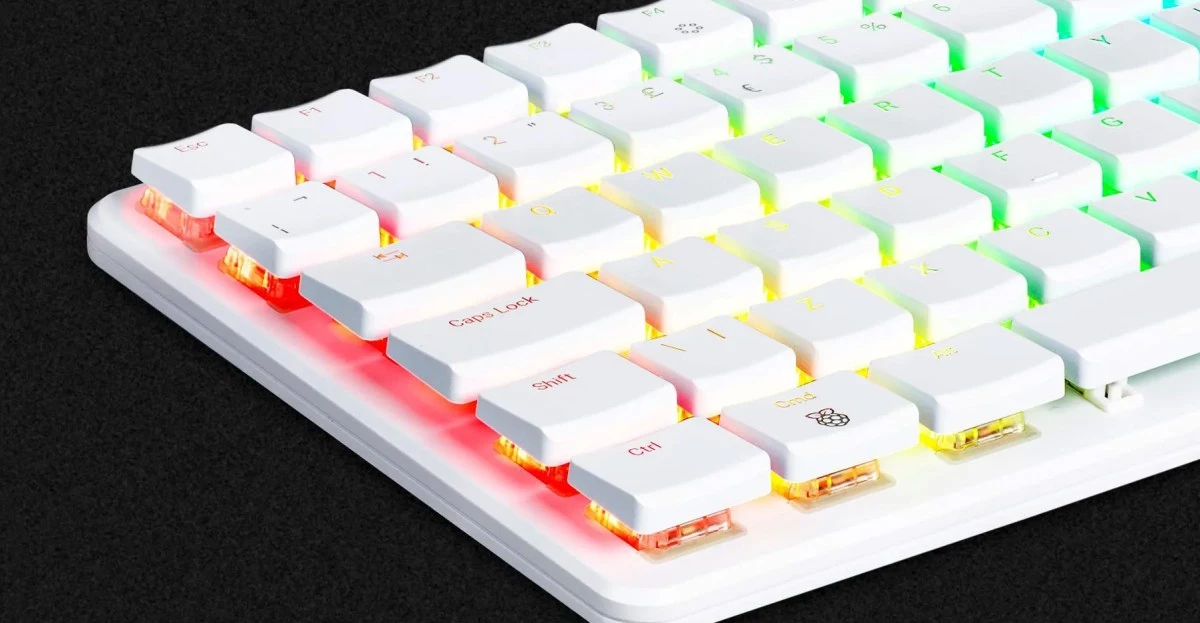
- Programmable Input: The fully programmable mechanical keyboard, powered by an on-board RP2040 microcontroller running QMK firmware, transforms the keyboard from a mere input device into a customizable, security-enhanced interface. Developers can now implement complex macros, per-key authentication, or even industrial control schemes at the firmware level.
This confluence of compute, storage, and interface innovation positions the 500 Plus as a modular system, aligning with modern practices such as overlay OS architectures and containerized IoT deployments. The separation of immutable boot media (SD) from high-speed data (NVMe) is a subtle but significant nod to enterprise-grade resilience.
Market Dynamics: Premiumization and Strategic Channel Moves
Raspberry Pi’s $200 MSRP—more than double its predecessor’s price—signals a deliberate pivot up the value chain. This is not a race to the bottom, but a calculated move to capture pent-up demand among enthusiasts and professionals alike. The 500 Plus now competes directly with:
- Discounted entry-level notebooks
- Refurbished x86 desktops
- ARM-based Chromeboxes
Yet, the Pi’s low power draw (≈15 W typical), robust community support, and modularity create a compelling total-cost-of-ownership narrative, especially for education and fleet deployments where energy efficiency and maintenance simplicity matter most.
The decision to bundle a 256 GB SSD is more than a technical upgrade—it’s a strategic supply-chain statement. It reflects a newfound confidence in NAND procurement and logistics, a far cry from the shortages that plagued the industry just a few years ago. This move is likely to reverberate across Raspberry Pi’s entire product stack, lowering costs and raising expectations.
Strategic Implications: Edge, Security, and the Maker-to-Pro Continuum
The broader context amplifies the 500 Plus’s significance. Intel’s exit from the NUC mini-PC market has left a vacuum that the Pi’s new flagship is well-positioned to fill. Its compact, well-documented architecture and mature developer ecosystem make it an attractive reference platform for kiosks, digital signage, and point-of-sale systems.
At the edge, the 500 Plus’s 16 GB of RAM and A76 cores meet the threshold for running quantized transformer models and computer vision pipelines locally. This enables enterprises to deploy physically secure, keyboard-form-factor edge nodes that process data on-site, reducing cloud egress fees and latency.
Perhaps most intriguing is the keyboard’s evolution into a programmable, secure surface. With QMK firmware and per-key RGB indicators, the device can serve as an authentication workstation, embedding one-time password challenge-response mechanisms directly into the keyboard layer. This intersection of physical security and productivity is a white space that few OEMs have explored.
For educators, the 500 Plus finally bridges the gap between basic GPIO scripting and advanced topics like containerization and NVMe performance profiling—without requiring a platform switch. The device offers a seamless upsell path through the curriculum, from K-12 experimentation to vocational training.
The Shape of Things to Come in Client Computing
The Raspberry Pi 500 Plus is more than a sum of its parts. It embodies the convergence of ARM’s ascendancy in the desktop space, the mainstreaming of maker-driven innovation, and the growing imperative for energy-efficient, modular computing. As enterprises grapple with ESG mandates and rising energy costs, and as educators and developers seek platforms that scale from tinkering to production, the 500 Plus stands as a harbinger of where the industry is headed.
Those who recognize this release as a strategic inflection point—rather than a niche curiosity—will find themselves well-positioned to capitalize on the next wave of cost-optimized, low-carbon client computing.

 By
By
 By
By

 By
By
 By
By

 By
By
 By
By







