
A Vatican case study in “two-speed” AI adoption: scale without surrender
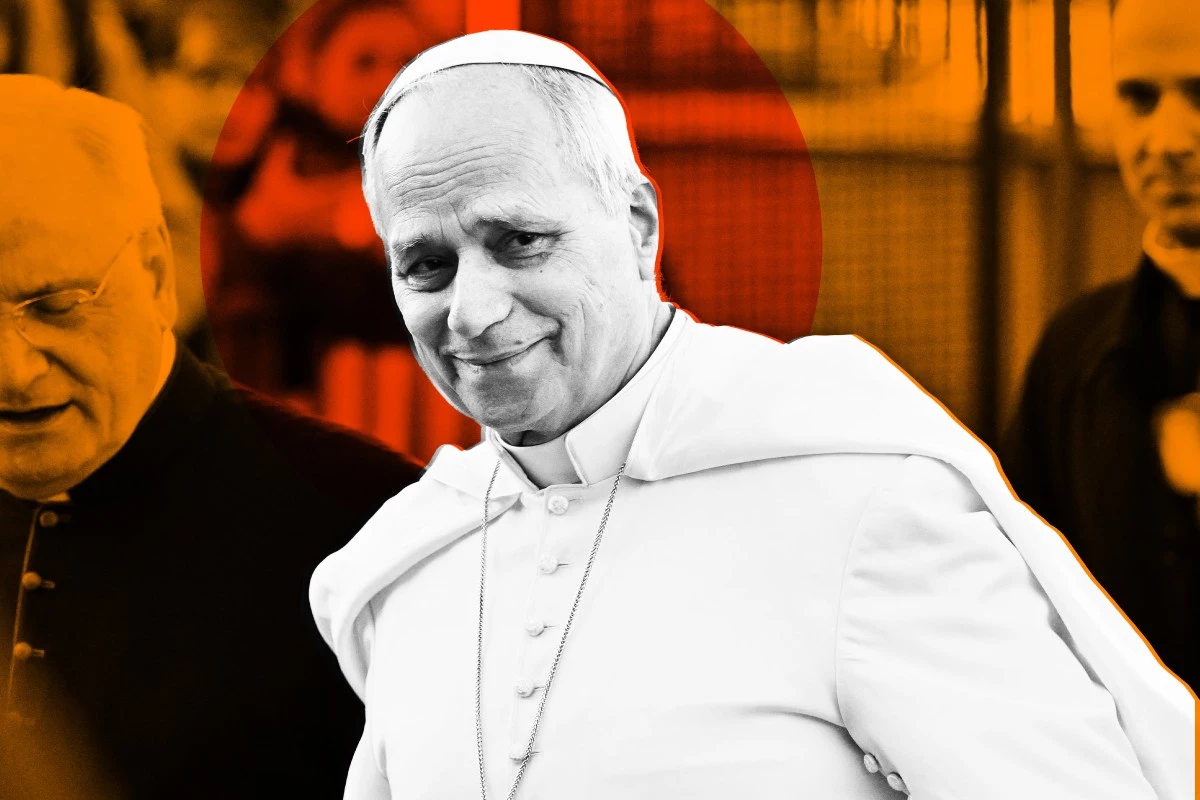
In a private exchange with the clergy of the Diocese of Rome, Pope Leo XIV drew a bright line around the use of artificial intelligence in preaching, discouraging priests from relying on AI to draft or deliver homilies. His reasoning was not framed as technophobia, but as a defense of formation: faith-sharing, he argued, requires the active exercise of a priest’s intellectual and spiritual faculties, and outsourcing that work risks a kind of inner atrophy—an evocative metaphor that lands well beyond ecclesial circles.
Almost simultaneously, the Vatican signaled a different posture toward the same technology by announcing work on an AI-driven translation platform designed to render liturgical texts in up to 60 languages in real time. Put side by side, the messages are not contradictory so much as strategically revealing: the Holy See is embracing AI where it expands access and operational reach, while resisting it where it could dilute the authenticity of the Church’s most human-facing act—preaching.
For business and technology leaders, this juxtaposition reads like a high-profile example of organizational ambidexterity: innovating aggressively in enabling functions while protecting the “core experience” from automation. In corporate terms, it is a deliberate separation of AI for distribution from human responsibility for meaning.
Translation as digital diplomacy: why multilingual liturgy matters strategically
The Vatican’s translation initiative is more than a technical upgrade. Real-time multilingual capability is a form of soft-power infrastructure, allowing a global institution to speak with greater immediacy to diverse communities. In an era when language remains one of the most stubborn barriers to participation—religious, civic, educational, and commercial—translation at scale functions like a multiplier.
From a strategic lens, the move resembles how multinational brands deploy language technologies to deepen market penetration and reduce friction across regions. For the Holy See, the “market” is not commercial, but the dynamics are comparable: localization increases relevance, and relevance sustains influence.
Key implications of AI translation for global institutions include:
- Broader inclusion at lower marginal cost: Once deployed, translation systems can expand reach without proportional increases in staffing.
- Faster responsiveness: Real-time rendering supports live events, pilgrimages, and global broadcasts where latency undermines engagement.
- Cultural diplomacy by design: Language access signals respect, strengthening legitimacy in emerging economies and multilingual societies.
- Potential partnerships and standards-setting: A Vatican-backed platform could intersect with NGOs, universities, and ethical AI vendors—especially where literacy and digital inclusion are policy priorities.
Yet translation is also a governance challenge. Liturgical language is dense with theology, tradition, and nuance; errors are not merely “bugs” but can become doctrinal or reputational liabilities. That raises the bar for quality assurance, human review, and transparent accountability—an issue any enterprise deploying AI in high-stakes communication will recognize.
The “authenticity premium” in an AI-saturated attention economy
Pope Leo XIV’s warning about AI-written homilies lands at a moment when automated content is flooding every channel, from marketing copy to customer support scripts to executive communications. His critique implicitly echoes a growing corporate concern: vanity metrics versus genuine trust. In religious life, the temptation may be to optimize for reach, novelty, or social media resonance; in business, it is often clicks, impressions, and engagement rates. In both cases, the risk is the same—substituting measurable activity for meaningful connection.
The Pope’s stance frames preaching as a domain where ethical agency and personal presence are not optional features but the product itself. That maps cleanly onto sectors where the “human interface” is central to value delivery—healthcare, education, law, counseling, leadership, and high-trust advisory services. As AI commoditizes routine outputs, differentiation shifts toward what machines still struggle to supply reliably:
- Moral reasoning under ambiguity
- Empathy and relational attunement
- Rhetorical presence and accountability
- Contextual judgment shaped by lived experience
In this sense, the Vatican is articulating a broader market signal: as synthetic content becomes ubiquitous, authenticity becomes scarcer—and therefore more valuable. Organizations that treat authenticity as a brand asset will increasingly formalize what must remain human, not because AI is incapable in principle, but because trust depends on knowing *who* is responsible for the words and the intent behind them.
Governance lessons for executives: where AI augments—and where it must not replace
The Vatican’s dual posture points toward a governance model many enterprises are still struggling to operationalize: permit AI in support functions, restrict it in identity-defining functions. This is not a simplistic “AI good/AI bad” framework; it is a boundary-setting discipline that protects mission integrity while still capturing productivity and reach.
A practical, board-level translation of this approach looks like a two-track AI strategy:
- Augmentation track (scale and enablement): translation, search, summarization, analytics, internal knowledge management, accessibility tooling, localization, and workflow automation.
- Preservation track (human accountability required): public-facing leadership messages, ethical decisions, sensitive counseling, performance evaluations, and any communication where authenticity is the product and liability is existential.
To make that real, institutions will need:
- Clear AI-use policies that define prohibited and permitted contexts, with escalation paths for edge cases.
- Training that strengthens human craft, not just AI literacy—writing, speaking, ethical reasoning, and cultural intelligence.
- Auditability and provenance controls, especially as deepfakes and synthetic text blur authorship.
- Alignment with emerging regulation (including the EU AI Act and evolving U.S. guidance) while anticipating societal expectations that often move faster than law.
What makes the Vatican’s moment notable is not the technology itself, but the clarity of the underlying thesis: use AI to remove friction from access, but do not outsource the formation of the messenger. In a world racing to automate expression, that boundary may become one of the most durable competitive and reputational advantages any institution can claim.

 By
By


 By
By
 By
By
 By
By

 By
By