

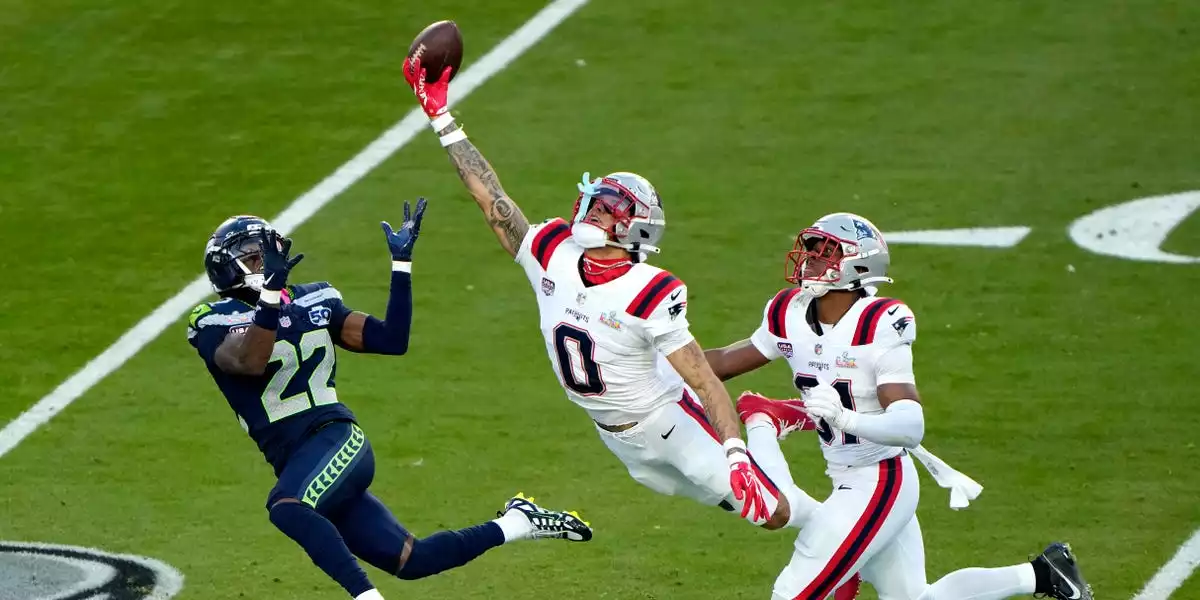

NFL dominance is reshaping the definition of “mass media” in the U.S.
The latest audience rankings underscore a structural shift in American television: the NFL is no longer merely the biggest property on TV—it is increasingly the only reliably national one. In 2025, 83 of the top 100 U.S. television programs by audience were NFL games, up from 72 the year prior. That concentration is striking not just as a sports story, but as a market signal about what still functions as shared, real-time culture.
The comparative gap is now stark. Live NFL games approach 20 million viewers on average, while prime-time non-sports programming hovers around 3 million. That delta matters because it changes how executives, advertisers, and investors evaluate risk. In a fragmented, on-demand environment, the NFL has become the clearest remaining proof that “appointment viewing” still exists at scale—and that it can still anchor the economics of the entire video ecosystem.
For broadcasters and platforms, this is less about taste than about physics: audiences are dispersed across apps, devices, and schedules, but live sports—especially the NFL—re-aggregates attention. The result is a new hierarchy where the biggest strategic question is no longer “What’s the next hit show?” but “What content can still command a simultaneous crowd?”
Streaming partnerships and the FCC spotlight: access, leverage, and the future of free broadcast
As the NFL expands relationships with Netflix, Amazon, and other streaming partners, it is also defending that strategy in front of regulators. The league’s presentation to the Federal Communications Commission (FCC) signals that distribution is now a policy issue as much as a product decision. The underlying concern: does shifting marquee games to streaming weaken free-to-air access, and if so, should government intervene?
From the NFL’s perspective, the argument is straightforward: broader distribution across broadcast and streaming reflects consumer behavior and supports innovation. From the regulator’s perspective, the question is equally clear: when a cultural institution migrates behind paywalls or device constraints, who gets left out—and does that matter enough to mandate remedies?
This tension creates leverage on both sides:
- The NFL gains negotiating power by demonstrating it can deliver massive audiences across multiple pipes, not just traditional broadcast.
- Streaming platforms gain “event gravity”—exclusive live games can drive subscriber acquisition, reduce churn, and elevate ad inventory.
- Broadcasters face a dual mandate: protect retransmission and advertising economics while proving they remain essential distribution partners.
The next phase may hinge on whether policymakers treat certain games as “crown jewel” events that deserve guaranteed free access. Even the possibility of free-to-air access mandates changes deal structures, rights packaging, and long-term platform strategy. For media companies, regulatory risk is no longer a footnote—it is becoming part of the rights valuation model.
Why networks are reallocating budgets: the brutal math of cost-per-viewer and margin pressure
The most consequential downstream effect of NFL supremacy is not what it does to sports—it’s what it does to everything else. When one genre delivers an order-of-magnitude higher viewership, it becomes harder to justify the traditional economics of entertainment programming.
Analysts are increasingly questioning the return on investment (ROI) for scripted series, reality franchises, and unscripted entertainment when the NFL can deliver vastly larger audiences with predictable outcomes. Even though NFL rights are expensive, they can be remarkably efficient on a cost-per-viewer basis because the audience is so large and so consistent.
Meanwhile, entertainment budgets are being reshaped in real time. The replacement or supplementation of legacy late-night production—such as CBS’s pivot away from Stephen Colbert-era economics toward lower-cost syndicated programming, including Byron Allen’s shows—is a visible indicator of a broader recalibration. The message is not that entertainment is “dead,” but that original entertainment is increasingly being asked to justify itself like a venture investment: high risk, uncertain payoff, and slower monetization.
Several forces are compressing margins outside sports:
- Stagnant ad rates for many scripted formats relative to production costs
- Rising subscriber acquisition costs across streaming video (SVOD), making “prestige” programming harder to rationalize as a growth lever
- Predictability advantages of syndicated or brokered content, which can deliver steady revenue with minimal upfront spend
In this environment, networks are evolving into sports aggregators with entertainment as a supporting asset, rather than the reverse. That is a profound identity shift for companies built on prime-time franchises and broad-based programming slates.
The next competitive frontier: data-driven sports monetization, interactive formats, and rights consolidation
If the NFL is the last great mass audience, the next battle is over how efficiently that audience can be monetized. The modern sports broadcast is becoming a data product as much as a media product, especially as streaming distribution and smart-TV ecosystems enable more granular measurement.
Expect the monetization playbook to accelerate in three directions:
- AI-driven personalization and dynamic ad insertion: micro-targeted sponsorships, localized creative, and audience segmentation layered onto live broadcasts.
- Hybrid broadcast-IP delivery: investments in 5G, edge compute, and seamless handoffs between linear and streaming to reduce latency and improve reliability—critical for both at-home and in-venue experiences.
- Immersive and social viewing features: augmented reality stats, alternate feeds, and watch-party mechanics designed to extend time spent and create new sponsorship surfaces beyond traditional ad breaks.
Advertisers, for their part, are shifting from pure reach to proof of engagement and incremental lift—wanting to connect live exposure to measurable outcomes. That demand points toward programmatic premium sports inventory, where pricing becomes more dynamic and yield optimization looks more like financial markets than legacy upfronts.
All of this raises the stakes of scale. As sports rights inflate, the industry may see more consolidation and partnership-building among broadcasters, telecom operators, and technology giants—each seeking distribution breadth, data access, and negotiating power. In a media economy increasingly organized around live events, the NFL is not just winning the ratings race; it is redefining the operating system of television itself.

 By
By
 By
By


 By
By

 By
By
 By
By







