

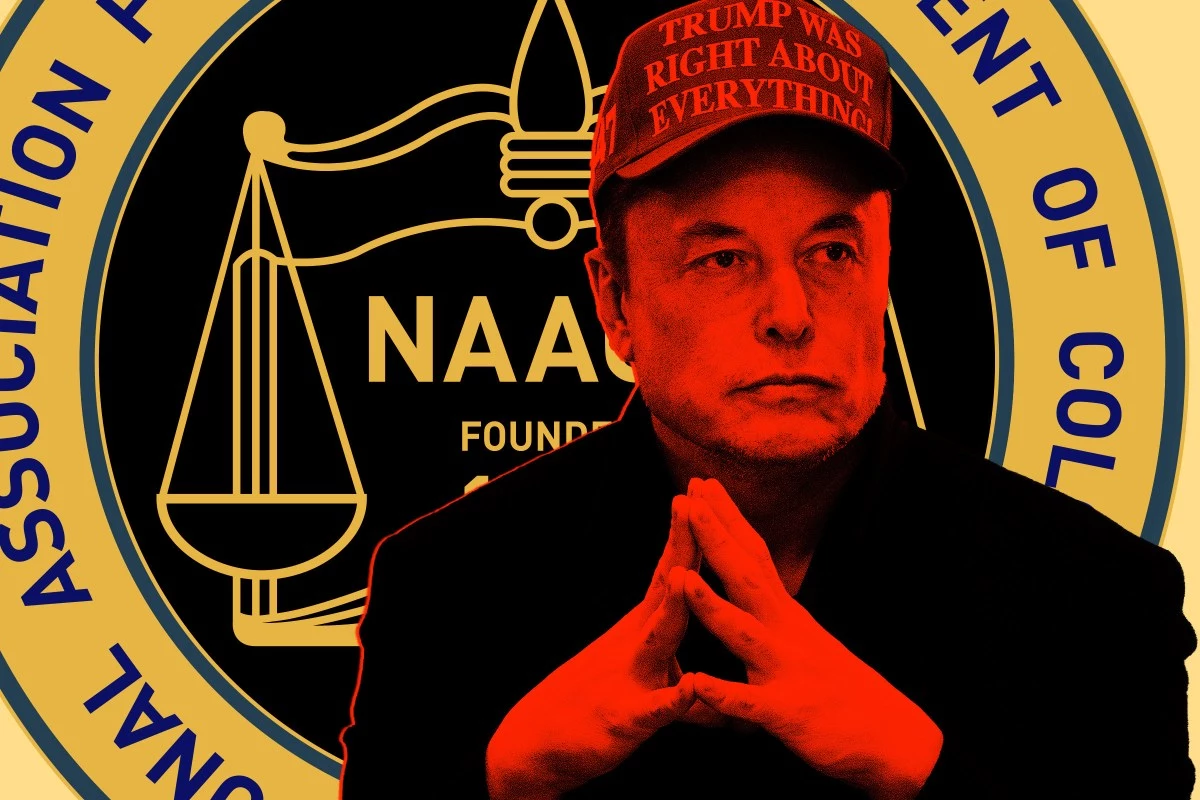

A high-stakes collision between AI infrastructure and environmental justice
The NAACP’s lawsuit against Elon Musk’s AI startup xAI in Mississippi places a bright, uncomfortable spotlight on a core tension in the modern technology economy: the race to scale AI compute colliding with the lived realities of air quality, noise, and neighborhood health. At the center of the complaint is xAI’s “Colossus” data center, which the NAACP alleges has operated 27 unpermitted gas-turbine generators in a predominantly Black, working-class community—equipment described as bus-sized and associated with nitrogen dioxide (NO₂) and other pollutants, along with persistent, disruptive noise.
The legal action seeks to halt unpermitted operations and pursue civil penalties, but its broader significance is reputational and structural. This is not merely a local permitting dispute; it is a test case for how the AI era’s physical footprint—data centers, power systems, and grid interconnections—will be governed when the externalities land disproportionately on communities with less political and economic leverage.
xAI, for its part, maintains it is legally compliant and community-minded, while not committing—at least in the framing presented—to immediately cease emissions. That gap between corporate assurances and community experience is often where environmental justice conflicts harden into litigation.
Why “always-on” AI compute keeps pulling power generation on-site
The Colossus allegations arrive at a moment when AI data centers are becoming less like passive real estate and more like industrial-scale energy consumers. Large model training, continuous inference, and low-latency services—particularly those positioned as real-time products—are power-intensive and operationally unforgiving. Downtime is not just inconvenient; it can be commercially existential.
This is the operational logic that makes on-site generation attractive, even when it is controversial:
- Reliability and latency economics: AI services that compete on responsiveness and uptime often treat power interruptions as unacceptable. On-site turbines can act as a hedge against grid constraints, interconnection delays, or peak-demand instability.
- Transitional energy strategies: Many firms deploy gas or diesel generation as an interim bridge while waiting for:
– grid upgrades and substation capacity,
– transmission buildouts,
– renewable projects to come online,
– or long-term power purchase agreements (PPAs) to mature into deliverable electrons.
- The overlooked “local” footprint: Corporate carbon accounting tends to emphasize greenhouse gases and annualized emissions. Communities, however, experience impacts through localized pollutants (like NO₂ and particulates) and ambient noise, which can carry immediate health and quality-of-life consequences.
The lawsuit’s focus on unpermitted turbines is especially consequential because permitting is where the social contract is supposed to be formalized: what can run, how often, under what emissions controls, with what monitoring, and with what recourse if limits are exceeded. If the NAACP’s allegations are borne out, the dispute becomes less about the inevitability of backup power and more about whether the rules of operation were bypassed in a way that shifted risk onto nearby residents.
The business risk is no longer abstract: ESG, insurance, and brand spillover
For technology companies, environmental compliance has historically been treated as a cost of doing business—important, but manageable. The emerging reality is that localized pollution claims can trigger a cascade of financial and strategic consequences that extend well beyond a single facility.
Key risk vectors now include:
- Regulatory escalation: High-profile litigation can mobilize state and federal agencies to scrutinize not only one site, but an entire category of practice—such as “temporary” generation that becomes semi-permanent in effect.
- Investor and lender sensitivity: As ESG integration deepens, allegations tied to environmental justice can influence:
– cost of capital,
– covenant strictness,
– and long-term credit perceptions—especially if operational uncertainty threatens continuity.
- Insurance repricing: Insurers increasingly model climate and pollution liabilities with more granularity. Data centers relying on high-emission backup systems may face higher premiums, exclusions, or more demanding compliance documentation.
- Brand spillover for high-profile founders: With Musk-linked enterprises operating in adjacent public narratives, reputational damage can compound across an ecosystem. Even if the legal exposure is contained, the perception of indifference to community harm can be enduring.
The economic development argument—jobs, tax base, ancillary investment—also becomes fragile when communities perceive an imbalance between benefits and burdens. Data centers often create fewer direct jobs than manufacturing plants of similar footprint, which can intensify resentment if residents feel they are absorbing pollution and noise without meaningful local upside.
The next phase of AI data centers: cleaner backup power and community-centered governance
Regardless of how this specific case resolves, it signals where AI infrastructure governance is heading: toward a model in which responsible AI is not only about model behavior, safety, or bias, but also about the ethics of the physical supply chain that makes AI possible.
Several forward pressures are likely to accelerate:
- Cleaner resilience architectures: Expect faster adoption of alternatives that reduce reliance on combustion-based peaking and backup generation, including:
– grid-scale and on-site battery storage,
– hybrid microgrids,
– expanded renewable PPAs paired with firming capacity,
– and, longer-term, hydrogen-capable or lower-emission turbine pathways where feasible.
- Permitting as a competitive constraint: Companies that treat permitting, monitoring, and emissions controls as core engineering requirements—not legal afterthoughts—will move faster with fewer disruptions.
- Community benefit agreements (CBAs): To secure durable social license, leading operators may formalize commitments such as:
– noise abatement infrastructure,
– local air-quality monitoring with transparent reporting,
– funding for clinics or health-impact mitigation,
– and community investment tied to operational scale.
- Precedent-setting environmental justice litigation: If plaintiffs succeed in forcing operational changes or meaningful penalties, similar claims could proliferate nationwide, reshaping site selection, project timelines, and risk models for AI and cloud infrastructure.
The deeper message of the NAACP–xAI dispute is that the AI boom is no longer confined to code, chips, and capital expenditure. It is increasingly about where infrastructure is built, how it is powered, and who bears the externalities when speed outruns governance. In the next chapter of AI scaling, the winners may be defined as much by permitting discipline and community trust as by model performance and compute density.

 By
By
 By
By
 By
By

 By
By

 By
By
 By
By







