

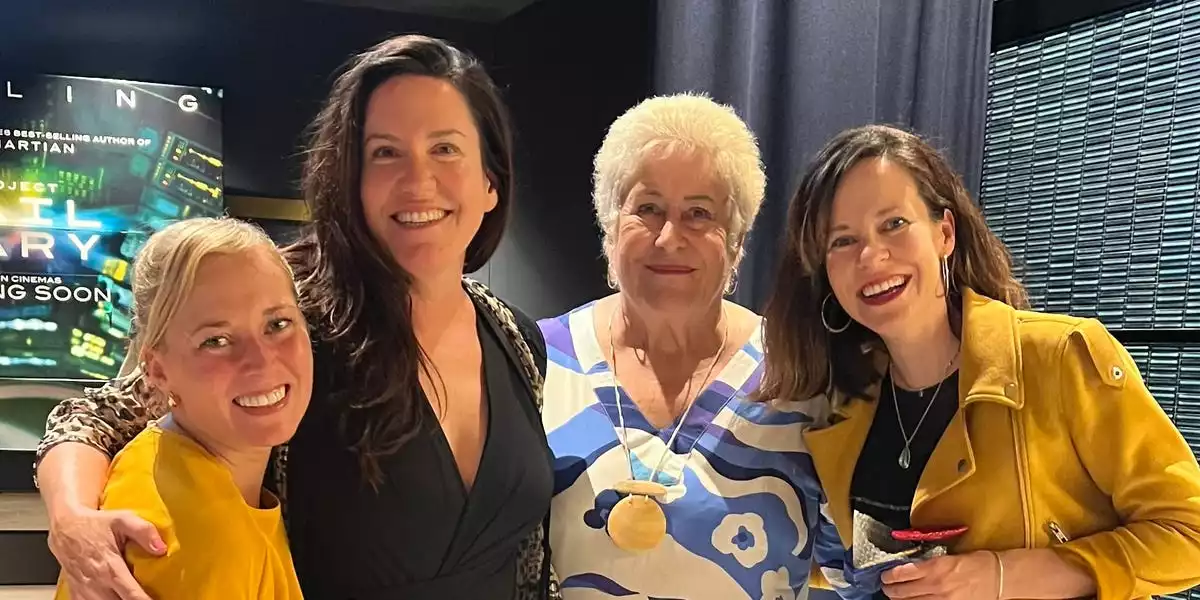

A personal reinvention that mirrors Australia’s shifting social and urban economics
A midlife move from Bright, Victoria (under 3,000 residents) to the Gold Coast (roughly 740,000) reads, on the surface, like a lifestyle reset. Look closer and it becomes a compact case study in how urbanization, time scarcity, and modern social fragmentation are reshaping the way professionals build community—and how businesses can respond.
The author’s approach was notably deliberate: a “yes-first” strategy that treated friendship-building as a form of active practice rather than passive luck. She initiated conversations in playgrounds, libraries, gyms, and ad-hoc local events, accepted invitations even when they arrived last-minute, and also hosted her own gatherings with meaningful lead time. The method is striking not because it is novel, but because it is increasingly rare in an era where many adults outsource connection to platforms, routines, and pre-existing networks.
This matters economically. Internal migration from regional towns to larger urban centers is often framed through jobs, housing, and infrastructure. Yet the hidden variable is social integration: whether newcomers can build a supportive network fast enough to make relocation sustainable. When social belonging lags behind career opportunity, churn rises—people leave roles, cities, and even industries. In that sense, the author’s success is not just personal; it is a lens on what makes mobility “stick.”
Key signals embedded in the story include:
- Mid-career mobility pressures: relocation is increasingly common among professionals balancing career advancement with family logistics.
- The social cost of modern adulthood: time constraints and risk aversion make friendship formation feel high-friction, even in densely populated cities.
- A growing market for structured connection: curated events and “lightly facilitated” gatherings are becoming a substitute for the community institutions that once did this work informally.
The quiet countertrend: analog networking in a platform-dominated world
The most revealing element is the author’s reliance on face-to-face outreach. At a time when social media, professional networking platforms, and algorithmic recommendations dominate, her experience underscores a countercurrent: serendipity still performs best in person, particularly for trust-building and emotional depth.
Digital tools excel at discovery—finding people, groups, and events. But they often struggle with the “last mile” of human connection: the awkwardness of first contact, the uncertainty of intent, and the difficulty of moving from chat to real-world rapport. The author effectively replaced algorithmic matching with a human operating system: openness, repetition, and low-stakes initiation.
For technology and platform builders, the opportunity is not to replace this analog method, but to scaffold it—to reduce friction without sterilizing authenticity. A credible next wave of community technology may look less like a feed and more like a bridge between micro-local proximity and shared intent, especially for life-stage cohorts (new parents, mid-career movers, remote workers).
Potential product directions implied by the narrative:
- Hybrid community platforms that prioritize *offline outcomes* (meetups, small-group activities, neighborhood introductions) over engagement metrics.
- AI-driven matchmaking based on geography, schedule windows, and interests—designed to replicate the “playground introduction” effect without feeling transactional.
- Augmented local discovery that helps residents identify recurring “third places” (libraries, community centers, gyms) where connection is most likely to form naturally.
The author’s deliberate choice to set aside “stranger danger” conditioning also highlights a design constraint: trust and safety must be embedded, but not so heavily that spontaneity collapses. Platforms that can balance light verification, clear norms, and opt-in transparency may unlock meaningful growth in local social capital.
The experience economy meets time-poor households: demand for flexible social leisure
Economically, the story points to a consumer segment that is both sizable and underserved: busy urban families and mid-career professionals who want connection but lack planning bandwidth. The author’s willingness to say yes to last-minute high tea, guided hikes, and spontaneous outings signals demand for leisure that is:
- Curated (someone else has done the planning)
- Flexible (works with unpredictable schedules)
- Social by design (not merely entertainment, but connection-enabled)
This is fertile ground for event platforms, hospitality brands, and local operators. The value proposition is not just the activity; it is the social architecture around it. Businesses that package experiences as “friendship-friendly”—small groups, repeatable formats, gentle facilitation—can capture spend while also increasing retention through community effects.
For the Gold Coast and similar urban growth corridors, this also intersects with city economics: newcomers drive demand for services, but their spending concentrates where they feel belonging. Community-building becomes an indirect lever for:
- Local business vitality (repeat visits, word-of-mouth networks)
- Neighborhood cohesion (safer, more engaged communities)
- Workforce stability (reduced relocation regret and early exits)
What corporate leaders and HR strategists should learn from a “yes-first” mindset
The most transferable insight may be organizational. The author created “playground moments” in real life—low-pressure environments where repeated exposure turns strangers into familiar faces. Companies often attempt belonging through formal programs, but the story suggests belonging is more often built through frequent, informal collisions paired with authentic follow-through.
For employers competing on talent—especially when hiring relocators or mid-career specialists—social integration is not a perk; it is a retention strategy. Practical applications include:
- Relocation support that extends beyond logistics: curated introductions, hobby-based meetups, local ambassador networks, and family-friendly community pathways.
- Internal micro-communities: interest circles, cross-functional “pop-up” sessions, and recurring small-group rituals that mimic the author’s structured gatherings (e.g., vision-board-style workshops oriented toward career goals or team direction).
- Agile collaboration norms: a “yes-first” culture can be operationalized through short-notice design sprints, cross-team shadowing, and lightweight experimentation—turning openness into measurable execution velocity.
The deeper takeaway is that authenticity scales when systems support it. Whether in cities, platforms, or enterprises, the winners will be those that treat community not as a marketing layer, but as infrastructure—designed for real schedules, real anxieties, and the very human need to be known in a new place.

 By
By
 By
By
 By
By
 By
By
 By
By
 By
By









