

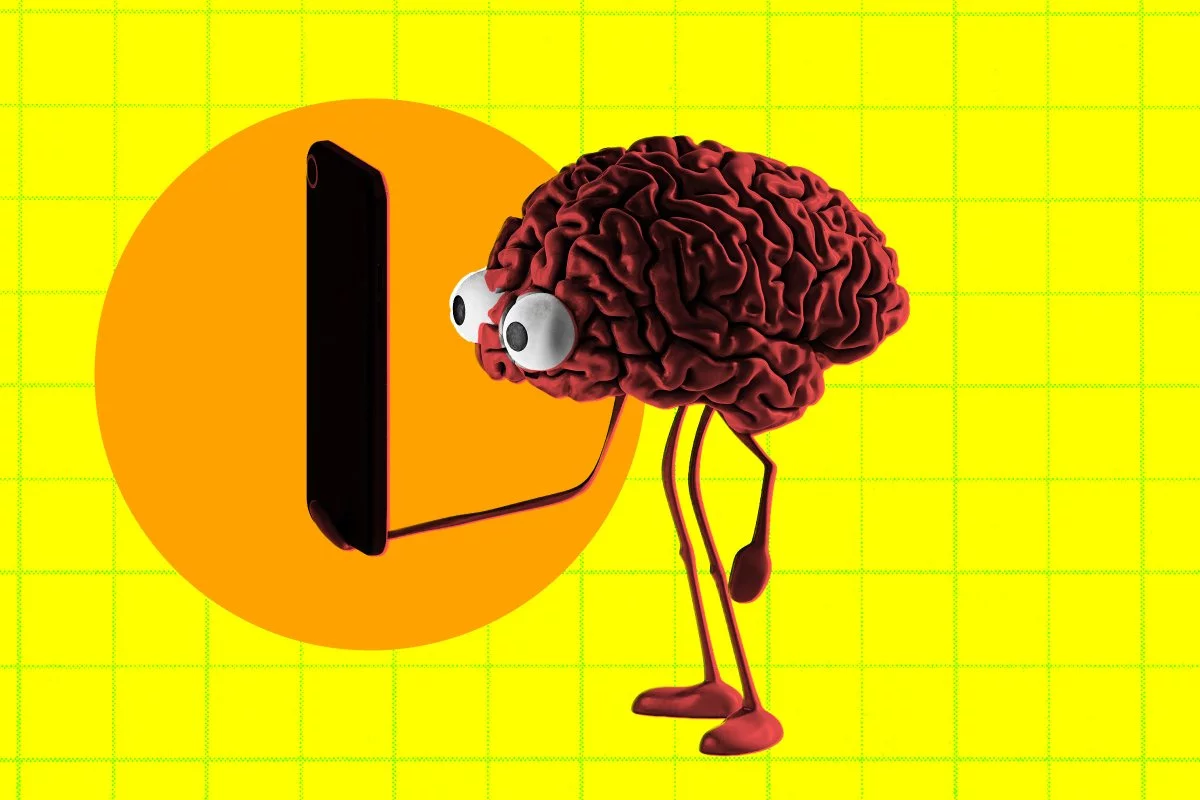

Evidence is sharpening around *how* generative AI changes thinking—not whether it does
Two fresh strands of peer-reviewed and working-paper research—published in *Technology, Mind and Behavior* and developed through an MIT–Carnegie Mellon collaboration—add rigor to a debate that has often been driven by anecdotes: generative AI’s cognitive impact is highly contingent on the interaction model.
The studies converge on a nuanced but consequential finding. When users delegate reasoning wholesale to chatbots—accepting outputs as final answers—there is measurable erosion in confidence, perceived ownership, and independent problem-solving. Yet when users treat the model as a *drafting partner*—interrogating claims, editing structure, rejecting weak suggestions—the cognitive outcome flips: users retain, and in some cases strengthen, critical-thinking behaviors and agency.
This distinction matters because it reframes the public conversation. The question is no longer “Is AI making people less capable?” but rather “Which usage patterns cultivate capability, and which quietly tax it?” For business leaders and product teams, that shift is operational: it points to design choices, training investments, and governance metrics that can either compound or mitigate cognitive offloading.
Key cognitive dynamics implied by the research include:
- Cognitive offloading: outsourcing mental work to the system, reducing effortful reasoning and weakening confidence over time.
- Cognitive partnership: using AI as a stimulus for critique and refinement, preserving ownership and deeper processing.
- Metacognition as the differentiator: the user’s ability to evaluate, challenge, and revise becomes the scarce skill—not prompt fluency alone.
Product design is becoming “cognitive ergonomics,” and vendors will be judged accordingly
As generative AI moves from novelty to infrastructure, interface decisions increasingly function like behavioral policy. The research suggests that the default “ask-and-receive” pattern can nudge users toward passivity—especially under time pressure—while “ask-challenge-refine” patterns can nudge users toward active reasoning.
That puts AI vendors on a new product frontier: designing for cognitive engagement, not just speed and satisfaction scores. The next wave of differentiation may come from features that make it easier—or even necessary—for users to think with the system rather than defer to it.
Design and roadmap implications likely to accelerate:
- Version history and provenance layers that show how an answer evolved and what assumptions it rests on.
- Annotation and critique workflows (inline comments, “mark as unsupported,” counterexample prompts) that normalize skepticism.
- Alternative-answer surfacing to reduce anchoring on the first plausible response.
- Justification prompts that ask users to explain edits or select rationales, increasing “desirable difficulty” and deeper encoding.
- Confidence ratings and uncertainty cues that encourage verification rather than acceptance.
This is not merely UX polish. It is a strategic bet on whether AI becomes a reasoning prosthetic that atrophies skills, or a reasoning amplifier that strengthens them. In competitive terms, vendors that can credibly claim “our product improves user judgment over time” may gain an edge in regulated and high-stakes domains—finance, healthcare, legal, engineering—where cognitive failure modes are expensive.
The productivity paradox returns—this time as a question of cognitive capital depreciation
Enterprises are adopting generative AI to compress cycle times, reduce labor costs, and scale output. The research introduces a counterweight: short-term throughput gains may mask long-term erosion in human capital quality if organizations normalize full cognitive delegation.
That risk is subtle because it can look like success—faster drafts, fewer meetings, quicker decisions—until the organization encounters novelty, ambiguity, or crisis. At that point, teams may discover they have optimized for execution while underinvesting in independent reasoning capacity, the very trait that supports resilience and innovation.
Business implications that follow from the evidence:
- Workforce agility becomes the hidden KPI: if employees lose confidence in their own reasoning, escalation rates rise and initiative falls.
- Innovation rates may soften: passive AI use can reduce the productive friction that generates original hypotheses and dissenting views.
- Error incidence can shift: fewer “visible mistakes” in routine work, but potentially more systemic errors when AI outputs are trusted without challenge.
- A new training market emerges: “AI-augmented reasoning” programs that teach critique, verification, and iterative refinement—skills closer to editorial judgment than prompt writing.
For leadership teams, the governance question becomes concrete: Are we building an AI-enabled organization, or an AI-dependent one? The difference will show up in how teams handle edge cases, how quickly they learn, and whether they can operate when models are wrong, unavailable, or misaligned with context.
Governance, labor markets, and regulation are converging on “AI literacy” as a strategic necessity
Board-level oversight of AI is expanding beyond privacy, security, and compliance. These findings suggest that cognitive impact belongs on the same dashboard—especially for functions that make consequential decisions. Organizations may soon treat cognitive risk the way they treat operational risk: measurable, auditable, and managed through controls.
Practical governance moves that align with the research:
- Adoption frameworks that measure cognitive outcomes, not just cost and speed—tracking confidence, rework, escalation, and innovation metrics.
- “Challenge sessions” in L&D where employees practice disputing AI outputs, documenting reasoning, and stress-testing assumptions.
- Knowledge management policies that treat validated AI annotations as co-created institutional IP—capturing human rationale so expertise doesn’t evaporate into ephemeral chats.
- Acceptable-use rules for critical teams (risk, legal, clinical, safety engineering) that require verification steps and human sign-off.
At the macro level, the labor market implications are hard to ignore. As AI automates routine cognitive tasks, mid-level knowledge roles could hollow out unless reskilling emphasizes judgment and critical reasoning. That dynamic can intensify wage polarization—rewarding those who can supervise, audit, and synthesize—while pressuring those whose work becomes “accept-and-forward.”
Regulators and standards bodies are already debating AI transparency and data governance; these cognitive findings add momentum to AI literacy requirements in education and professional settings. Expect more interest in assessment models that reward *process*—annotated drafts, reflective reasoning, critique logs—rather than only final outputs.
The emerging message for the market is clear: the economic value of generative AI will be maximized by organizations that institutionalize active engagement—designing tools, training, and governance so that humans remain accountable authors of decisions, not merely recipients of machine-generated plausibility.

 By
By
 By
By


 By
By

 By
By
 By
By







