

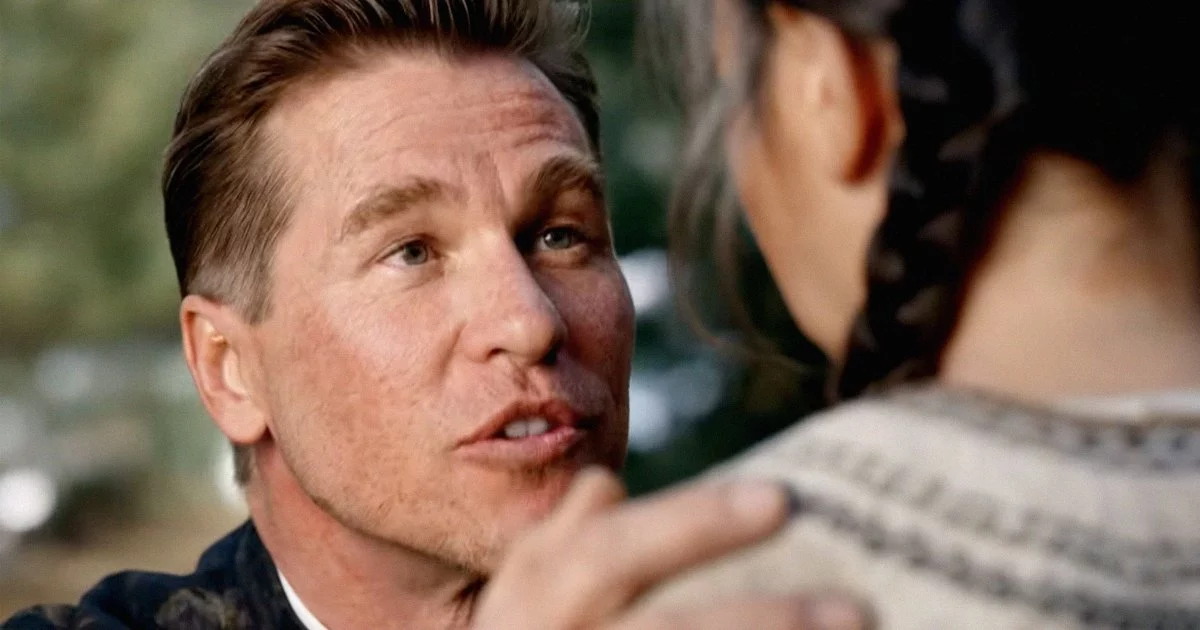

A synthetic Val Kilmer and the new fault line in Hollywood’s AI era
Hollywood’s relationship with generative AI has moved from experimentation to escalation—and the public is increasingly treating it as a referendum on artistic legitimacy. The latest catalyst is *As Deep as the Grave*, an indie film whose trailer debuted at a Las Vegas trade event featuring an AI-rendered performance authorized by Val Kilmer’s estate to stand in for the ailing actor. The reaction has been swift: critics point to the trailer’s visible artificiality, while many performers and observers frame the move as a step toward “digital necromancy,” a phrase that captures both the technical spectacle and the moral unease.
What makes this moment commercially significant is not simply that a digital likeness appeared on screen—Hollywood has flirted with that for years—but that the practice is now being positioned as repeatable, licensable, and scalable. The Kilmer case is a high-signal indicator that the industry is testing whether audiences will accept synthetic performances as a normal production tool rather than a rare, carefully justified exception. The answer will shape not only casting and budgets, but also the long-term value of celebrity identity as an asset class.
The technology is accelerating faster than the craft can disguise it
The enabling technologies—text-to-video generation, neural rendering, voice synthesis, and performance capture augmentation—have matured to the point where producers can plausibly replace reshoots, patch dialogue, or “complete” scenes without the original actor returning to set. For studios and independents alike, the appeal is straightforward: fewer scheduling constraints, fewer costly pickups, and a more modular post-production process.
Yet the Kilmer trailer also illustrates the current ceiling. Even when photorealism is close, authenticity is harder to synthesize than surface detail. Human performance is not just facial geometry and vocal tone; it’s micro-timing, spontaneity, and emotional ambiguity—qualities that audiences detect intuitively. This is where the economics collide with the aesthetics:
- Efficiency gains: AI avatars can reduce reshoot costs, compress timelines, and de-risk production delays.
- Creative trade-offs: Many AI performances still register as uncanny, particularly in emotional scenes, undermining immersion.
- Reputational exposure: A visibly synthetic performance can shift attention from story to process, turning a film into a referendum on its methods.
For decision-makers, the strategic question is whether generative AI becomes a discreet tool—used sparingly and transparently—or a structural replacement for labor and craft. The market will likely tolerate the former far more readily than the latter.
Likeness rights become a marketplace—and a new kind of IP supply chain
The most consequential shift may be legal and commercial rather than cinematic: estates licensing posthumous likeness rights creates a secondary market for “performances” that can be manufactured long after an artist’s death or retirement. In business terms, this turns identity into a renewable resource—one that can be packaged, sold, and reissued across films, streaming series, advertising, games, and immersive experiences.
That opportunity comes with governance problems that current contracts and statutes are not built to handle. Consent is no longer a one-time signature; it becomes an ongoing question of scope, context, and brand stewardship. Even when an estate authorizes use, audiences may still ask whether the result aligns with the performer’s legacy or artistic intent.
This is also where labor dynamics sharpen. Unions such as SAG-AFTRA are pressing for clearer protections against AI-driven displacement and for enforceable rules around digital replicas, compensation, and residuals. The dispute is not merely about one actor or one film; it’s about whether the industry is quietly rewriting the definition of “work performed”:
- If a synthetic performance is derived from prior footage, who is the performer of record?
- If an estate licenses a likeness, what replaces the traditional residual model?
- If AI reduces the need for marquee talent in reshoots, how does that reshape bargaining power?
Studios, meanwhile, see a parallel strategic upside: legacy IP can be extended indefinitely, enabling reboots, spin-offs, and “new” appearances without the constraints of age, availability, or mortality. That prospect will likely increase partnership activity between tech vendors and rights holders—and could even fuel M&A interest in IP-rich catalogs where likeness and franchise value are tightly intertwined.
Regulation, platformization, and the battle for audience trust
The Kilmer controversy lands in a regulatory gray zone. Many jurisdictions lack clear, harmonized rules governing post-mortem digital likeness exploitation, leaving the industry to operate through private agreements, public backlash, and evolving union contracts. Legislative efforts—such as California’s digital personality rights and broader EU AI regulatory frameworks—are moving, but not yet fast enough to provide consistent global guardrails for a business that distributes content worldwide on day one.
At the same time, generative AI is accelerating the platformization of creativity. Tools once reserved for major studios are being integrated into accessible production pipelines, empowering indie creators while intensifying competition for attention in an already saturated streaming economy. AI also offers operational resilience: virtual production and synthetic performance can reduce dependence on travel, locations, and physical logistics—an attractive hedge against geopolitical disruption or public health shocks.
Still, the decisive variable may be neither technology nor law, but audience trust. Cost savings and speed are compelling, but entertainment is a credibility business: viewers must believe in what they’re seeing. If synthetic performances are perceived as exploitative, deceptive, or disrespectful—especially when involving deceased or incapacitated artists—studios risk a slow erosion of brand equity that no efficiency gain can fully offset.
The industry’s next competitive advantage may therefore be ethical as much as technical: clear consent frameworks, transparent disclosures, fair compensation models, and disciplined creative justification. Hollywood can likely build a future where AI supports storytelling—but if it treats human identity as just another reusable asset, it may discover that the most expensive thing to replace is the audience’s willingness to suspend disbelief.

 By
By
 By
By
 By
By

 By
By

 By
By
 By
By







