
Google’s market-cap momentum is being priced as an infrastructure story, not a model story
Google’s sharp stock move—up roughly 10% following a standout set of Big Tech earnings—has been interpreted by markets as more than a quarterly beat. It signals a reassessment of what constitutes durable advantage in the AI era. With investors increasingly rewarding companies that can deliver AI at scale (not merely demo it), Google is now viewed as approaching the threshold of overtaking Nvidia in global market value—an extraordinary reversal given Nvidia’s central role in the generative AI boom.
The key shift is conceptual: AI leadership is no longer judged solely by benchmark performance or model charisma. It is being judged by delivery capability—the ability to reliably serve inference, training, fine-tuning, and enterprise-grade deployment under real-world constraints. In that framing, Google’s decades-long buildout of the “boring” parts of AI—fiber, data centers, custom silicon, and internal software systems—starts to look like the most strategic AI bet in the industry.
A prominent AI-compute ranking highlighting Google’s advantage reinforces the market’s emerging thesis: speed and reliability are becoming as decisive as model sophistication. As model quality converges across frontier labs, the differentiator becomes who can ship AI features with consistent latency, predictable cost, and global availability.
The hidden compounding engine: fiber, hyperscale data centers, TPUs, and software control
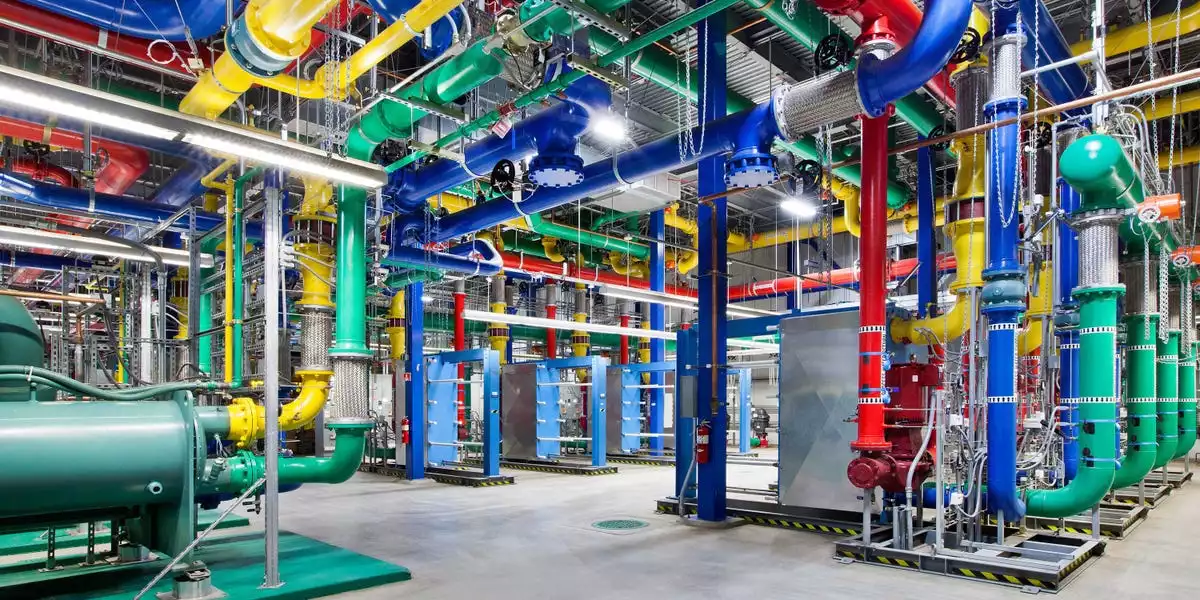
Google’s AI posture is unusually integrated. While many AI leaders rely on a patchwork of third-party compute, networking, and orchestration layers, Google has spent years assembling a vertically integrated stack that spans:
- Global fiber networks that reduce bottlenecks and improve service consistency across regions
- Hyperscale data centers designed for high utilization and rapid workload scheduling
- Custom Tensor Processing Units (TPUs) that reduce dependency on external GPU supply cycles
- Proprietary software frameworks and operational tooling that streamline training and inference pipelines
This vertical integration matters because AI is increasingly an operations discipline. The frontier is not only “Can you build a powerful model?” but “Can you run it economically, safely, and fast—at enterprise scale?” In practice, that means:
- Lower latency for interactive AI experiences, which directly affects user engagement and conversion
- Higher throughput for enterprise workloads, improving cloud margins and customer satisfaction
- More predictable performance for regulated industries where downtime and drift are unacceptable
Google’s culture has long treated milliseconds as strategic—an ethos often traced back to Larry Page’s early insistence that speed shapes user behavior. That same logic now applies to AI inference. For mission-critical applications in finance, healthcare, industrial IoT, and customer operations, latency is not a vanity metric; it is a gating factor for adoption.
The implication for the broader AI market is stark: the competitive arena is shifting from “best model” to best system—a blend of silicon, networking, orchestration, and developer experience that determines whether AI becomes a dependable utility or an expensive experiment.
Cloud growth and search resilience suggest AI spend is translating into commercial pull
Two financial datapoints stand out in the narrative: Google Cloud revenue growth of 68% year-over-year and a 19% increase in search income, even as the company continues heavy internal AI investment (including efforts around Gemini). For investors, this combination reduces a central fear: that AI spending would dilute profitability without clear monetization.
Instead, the numbers imply that AI infrastructure is functioning as a commercial flywheel:
- Cloud becomes the monetization layer for AI compute, tooling, and managed services
- Search remains resilient, suggesting Google is defending its core cash engine while modernizing the product experience with AI
- Enterprise adoption accelerates when customers see reliable performance, clear governance options, and scalable pricing structures
This is where the phrase “compute is destiny” gains practical meaning. Compute scarcity is not merely an industry inconvenience; it is a market-structuring force. When capacity is tight, the owners of large-scale infrastructure gain:
- Pricing power (through premium tiers, committed-use discounts, and capacity reservations)
- Contract leverage (longer commitments, bundled services, and platform standardization)
- Ecosystem gravity (developers build where capacity and tooling are dependable)
Competitors and partners such as OpenAI and Anthropic competing for compute access underscore the asymmetry. Frontier labs may lead in research velocity, but hyperscalers increasingly control the resource that determines how quickly research becomes product.
Strategic lock-in, talent scarcity, and regulatory friction will define the next phase
Google’s opportunity now extends beyond raw infrastructure. The company can deepen platform dependence through a familiar enterprise playbook—credits, proprietary APIs, integrated development environments, and managed services that reduce time-to-production. Over time, that creates switching costs not only in code, but in operational habits, compliance workflows, and cost-optimization strategies.
Several strategic dynamics are likely to shape outcomes:
- Ecosystem lock-in by design: integrated tooling and proprietary accelerators can make workloads cheaper and faster on Google Cloud, but harder to migrate elsewhere.
- Talent as a bottleneck: chip design, data-center engineering, and distributed systems expertise are increasingly scarce, raising barriers for would-be challengers.
- Partnership leverage: capacity arrangements—such as selling or allocating compute to AI labs—can monetize infrastructure while seeding innovation that expands demand for Google’s platform.
- Regulatory and geopolitical exposure: hyperscale AI infrastructure invites scrutiny around antitrust, data sovereignty, and export controls, with divergent expectations across the U.S., EU, and Asia.
The broader industry tension is between democratization and consolidation. On one hand, AI tools are becoming more accessible. On the other, the economics of frontier-scale compute favor incumbents with balance sheets large enough to preemptively build capacity. That leaves openings for niche players at the edge—telecom-linked, low-latency deployments and specialized inference providers—but the center of gravity remains with the infrastructure owners.
What markets appear to be pricing into Google’s renewed ascent is a simple proposition: in an AI economy, the most defensible advantage may belong to the company that can reliably deliver intelligence as a service, at global scale, with predictable performance and cost. That is not just a product story—it is an industrial one, and Google is increasingly being valued like an industrial-scale AI utility.


 By
By
 By
By

 By
By
 By
By
 By
By
 By
By