
Amsterdam’s data-center protest signals a new phase of AI infrastructure scrutiny
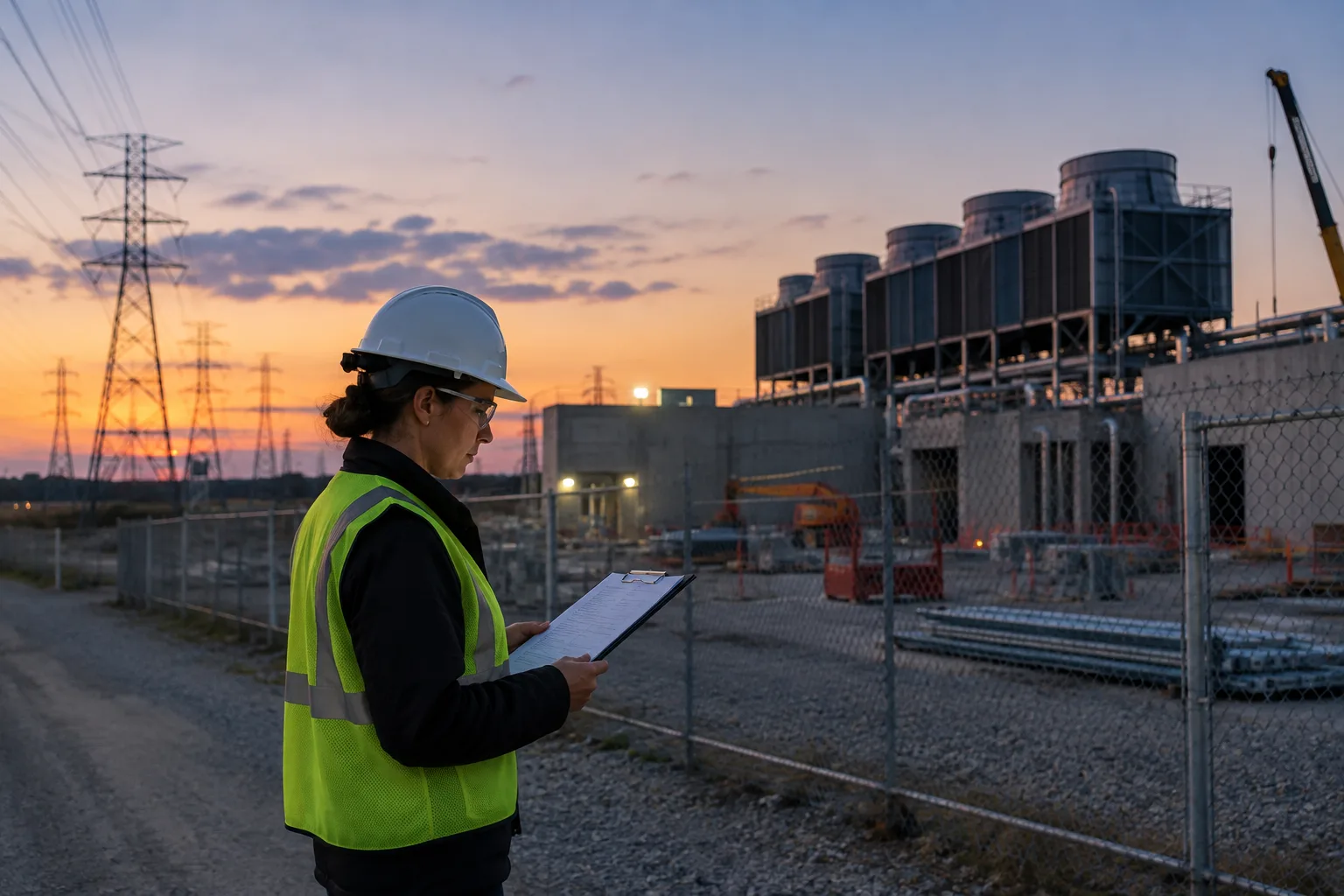
The alleged vandalism of a Microsoft data center under construction in Amsterdam—claimed by Extinction Rebellion activists using water balloons filled with hydrogen peroxide, acetic acid, salt, and paint—lands as more than a local disruption. It is a vivid marker of how AI infrastructure has become a frontline issue in Europe’s broader debate over energy scarcity, water stewardship, and the social legitimacy of hyperscale expansion.
The activists’ stated aim was to dramatize the environmental footprint of large-scale AI, particularly the electricity and cooling resources required to train and serve modern models. Yet the rhetoric attached to the action also reached beyond climate concerns, tying the company’s global role to geopolitical grievances and alleged complicity in overseas conflicts. That fusion matters: it reflects an emerging pattern in which technology firms are evaluated through an intersectional lens, where carbon, water, labor, human rights, and geopolitical alignment are increasingly treated as one continuous accountability chain.
For operators and investors, the immediate incident is less important than what it represents: a tightening “social license to operate” for data centers, especially in regions where grids are constrained, permitting is politically sensitive, and communities feel they are absorbing costs without proportional local benefit.
The hidden physics of AI growth: power density, cooling, and water as strategic constraints
AI’s infrastructure challenge is not abstract. Modern training and inference—especially for GPU-heavy workloads—push data centers toward high power density and continuous utilization. That combination turns electricity procurement and heat rejection into board-level constraints, not just engineering details.
Key technical realities now shaping public and regulatory attention include:
- Energy intensity and grid impact
Hyperscale AI campuses can require power on the scale of hundreds of megawatts, creating competition with residential and industrial demand. In tight markets, incremental load can amplify price volatility and raise concerns about reliability.
- Cooling as a reputational and operational differentiator
Traditional cooling can be water-intensive depending on design and climate. The protest highlights why operators are accelerating alternatives such as:
– Direct-to-chip liquid cooling (cold plates) for high-density racks
– Immersion cooling using dielectric fluids
– Hybrid approaches that reduce evaporative water dependence and improve PUE (Power Usage Effectiveness)
Cooling choices increasingly function as a public-facing metric of seriousness, not merely a cost line.
- Hyperscale concentration versus edge distribution
Concentrating compute in a few large campuses can stress specific regional grids and water systems, while edge or distributed architectures can spread load geographically. The trade-off is complexity: distributed deployments can dilute scale economies and increase network and orchestration demands. Still, the political economy of siting may push more workloads toward regions with abundant renewables, cooler climates, or more permissive capacity planning.
In this context, the Amsterdam action reads as a pressure point on a broader question: who bears the local externalities of global AI demand, and what technical commitments are sufficient to justify new capacity.
Regulation, capital markets, and the rising cost of “permission to build”
Europe’s energy transition—combined with geopolitical shocks and grid constraints—has made electricity a strategic resource. That reality is reshaping the economics of data centers and the policy posture toward hyperscalers.
Several market dynamics are converging:
- Regional energy pricing and capacity constraints
Where supply is tight, regulators may introduce demand charges, capacity fees, or temporary moratoria. Even the expectation of these measures can change site-selection math and financing assumptions.
- Regulatory arbitrage and incentive backlash
Activists’ references to “loopholes” echo a growing skepticism toward permitting pathways and subsidies perceived to favor large operators. This raises the risk of:
– Reduced or rescinded tax incentives
– New carbon-related levies or water usage fees
– Stricter environmental performance standards tied to permits
- Capex exposure and schedule risk
Data center projects are capital-intensive and schedule-sensitive. Delays driven by community opposition, legal challenges, or heightened security requirements can inflate sunk costs and weaken return on assets. Increasingly, investors and lenders are looking for evidence that a project has durable local legitimacy—effectively treating community acceptance as a component of credit quality.
The reputational dimension is equally material. Targeting a globally recognized brand signals that no hyperscaler is too prominent to be singled out, and that narratives can spread quickly across stakeholders—municipal authorities, NGOs, employees, and institutional investors—especially when environmental and human-rights claims are bundled together.
What technology leaders can do now: engineering credibility, community legitimacy, policy resilience
For executives overseeing AI infrastructure, the practical lesson is that sustainability and stakeholder engagement must be designed into the project, not appended after controversy emerges. The most resilient strategies tend to combine measurable engineering improvements with governance that communities can verify.
Priority actions increasingly include:
- Embed sustainability into core design and procurement
– Binding renewable power purchase agreements (PPAs) and credible additionality claims
– Closed-loop or minimized-water cooling where feasible, with transparent water accounting
– On-site generation, storage, or micro-grid partnerships to reduce grid stress narratives
- Institutionalize community co-creation
– Independent advisory councils with local residents, environmental experts, and municipal stakeholders
– Co-funded local resilience investments (energy storage, efficiency upgrades, water conservation) that make benefits tangible and legible
- Anticipate regulatory evolution with scenario planning
– Stress-test financial models for carbon pricing, water fees, and tighter permitting
– Participate in multi-stakeholder standards efforts to shape enforceable, comparable metrics for data center environmental performance
- Treat activism as an enterprise risk category
Alongside cyber and supply-chain risk, organizations are beginning to model “direct action” scenarios—covering security posture, insurance, operational continuity, and communications discipline—while maintaining commitments to lawful, nonviolent protest norms.
- Report with granularity that withstands scrutiny
High-level sustainability claims are no longer sufficient. Operators are increasingly expected to publish energy source mix, water usage intensity, and community investment outcomes, ideally with third-party validation (e.g., ISO 14001, LEED, BREEAM) to reduce accusations of selective disclosure.
Amsterdam’s incident illustrates a central tension of the AI era: the world is demanding more compute, faster, while also demanding that the physical footprint of that compute be locally acceptable, environmentally disciplined, and geopolitically defensible. The companies that thrive will be those that can make AI infrastructure not just powerful and profitable, but demonstrably compatible with the constraints—and expectations—of the places that host it.

 By
By
 By
By


 By
By

 By
By
 By
By