

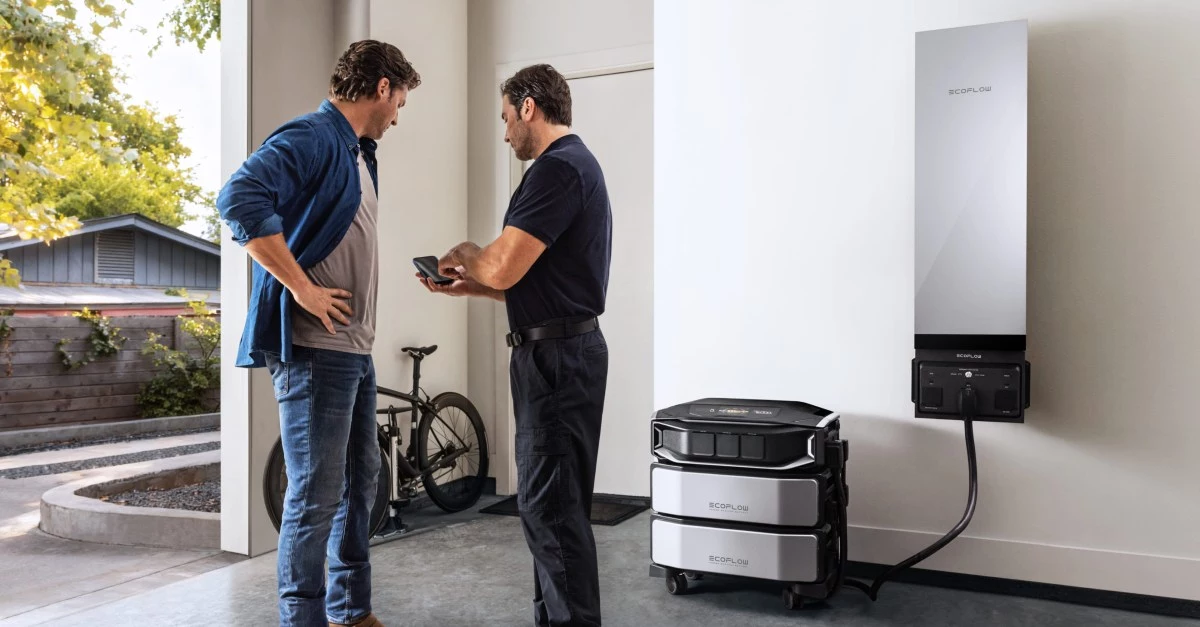

The Delta Pro Ultra X: Redefining Residential Energy Storage at Scale
EcoFlow’s unveiling of the Delta Pro Ultra X marks a watershed moment in the evolution of home energy storage. In a landscape traditionally dominated by incremental improvements, the Ultra X arrives as a modular, high-power platform that blurs the boundaries between residential, prosumer, and light-commercial applications. With its 12 kW continuous output—towering over the likes of Tesla’s Powerwall 2 and Generac’s PWRcell—and a scalable architecture supporting up to 180 kWh, EcoFlow isn’t merely playing catch-up. Instead, it’s rewriting the rules of what homeowners and small businesses can expect from their backup and load-shifting infrastructure.
Architecture That Outpaces the Status Quo
The Delta Pro Ultra X’s technical leap is twofold: power density and modular scalability. Where most single-inverter systems falter under the demands of whole-home loads—think HVAC, Level-2 EV charging, and simultaneous appliance use—EcoFlow’s 12 kW output and parallel inverter stacking (up to 36 kW) make load-shedding a relic of the past. The ability to expand capacity from 12 kWh to a staggering 180 kWh, using stackable battery blocks, positions the system for everything from suburban homes to microgrids and multi-family dwellings.
This is not just a matter of brute force. The third-generation 200 A Smart Home Panel, capable of controlling 32 circuits, integrates seamlessly with distributed energy resources (DERs) like solar PV, gas generators, and EV chargers. Its native Time-of-Use (ToU) algorithms orchestrate battery dispatch in real time, exploiting tariff arbitrage opportunities as utilities roll out dynamic pricing. The result: a home energy node that’s ready for tomorrow’s virtual power plant (VPP) economy.
Installation, Economics, and the New Mobility
Historically, the Achilles’ heel of residential storage has been the so-called “soft costs”—permitting, labor, and balance-of-system components—that can comprise up to 65 percent of the total installed price in the U.S. EcoFlow’s promise of sub-one-day, on-site installation via a 425-partner installer network is a direct assault on this bottleneck. The system’s “relocatable” design, meanwhile, is a subtle nod to the realities of a more mobile, rental-oriented society. For homeowners and property managers alike, the ability to move a high-value asset from one address to another is a paradigm shift.
On the economic front, EcoFlow’s pricing strategy is equally disruptive. Entry-level configurations land at roughly $667/kWh installed, with larger builds approaching $400/kWh—undercutting the psychological $500/kWh barrier that has long deterred whole-home adoption. Factor in the 30 percent federal tax credit under the Inflation Reduction Act, and the ROI calculus for non-solar homes, especially in volatile markets like California and Texas, becomes compelling.
Key market drivers include:
- Rising grid instability: U.S. outage minutes have soared 151 percent over the past decade.
- Accelerating electrification: Heat pumps and EVs are driving up household power needs.
- Dynamic pricing: Volatile tariffs and ToU programs expand the value proposition for intelligent storage.
Strategic Ripples: From Prosumer Economics to Grid-Scale Impacts
EcoFlow’s move is not merely a product launch—it’s a strategic play that resonates across the energy ecosystem. The Ultra X’s capacity and integration capabilities open the door to revenue-generating prosumer models, where homeowners participate in grid services and VPPs, capturing recurring SaaS-like margins atop hardware sales. Its circuit-level telemetry aligns with FERC Order 2222, which will soon allow aggregated residential storage to compete in wholesale markets.
The installer network, now 425 strong, signals a shift from direct-to-consumer e-commerce to the traditional contractor channel. This expansion will test margins and incentives, especially against entrenched players like Generac and Enphase. Yet, EcoFlow’s consumer-electronics DNA and in-house engineering—particularly its use of LFP chemistry and proprietary battery management systems—enable a bill of materials efficiency that legacy generator companies may struggle to match.
Perhaps most intriguing is the system’s potential to reshape grid planning. If EcoFlow achieves even modest penetration in new-build homes, utilities will face a tangible reduction in peak demand growth. Behind-the-meter storage, once a niche insurance policy, will emerge as a non-wires alternative, redirecting billions in capital expenditure.
The New Contours of the Energy Platform
The Delta Pro Ultra X is more than a product—it’s a platform. Its modularity and ease of relocation create collateralizable assets, primed for the rise of energy-as-a-service models and innovative financing. As fintech and energy converge, expect to see lease-to-own plans bundling storage, solar, and load-control software, democratizing access for a broader swath of homeowners.
In this rapidly decentralizing grid environment, the winners will be those who treat storage not as static insurance, but as a dynamic, revenue-generating platform. EcoFlow’s leap from portable power to whole-home and microgrid contender is emblematic of this shift—a signal that the age of passive backup is yielding to an era where every home can be both consumer and contributor. For industry observers, including those at Fabled Sky Research, the message is clear: the boundaries of residential energy are being redrawn, and the future belongs to those who build for flexibility, integration, and scale.

 By
By
 By
By

 By
By
 By
By

 By
By
 By
By







