


The Dawn of Distributed Air Defense: Mesh Networks and the New Economics of the Battlefield
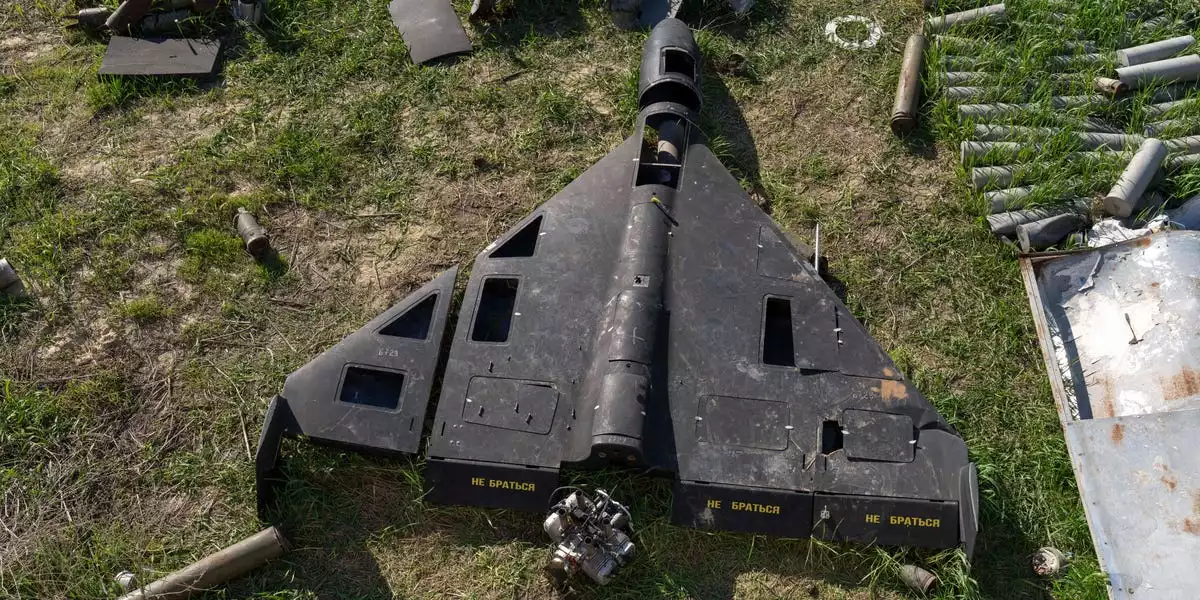
The face of modern warfare is being quietly, but radically, reshaped above the contested skies of Ukraine. Atreyd’s so-called “drone wall” is not merely a technical upgrade—it is a paradigm shift, a reimagining of air defense as a living, learning mesh rather than a static line of steel and silicon. This distributed, AI-enabled interception layer, if it fulfills its laboratory promise on the battlefield, could upend the cost calculus of defending against Russia’s Shahed drone and glide-bomb campaigns. The implications ripple far beyond the Donbas, touching procurement priorities, alliance strategy, and even the very nature of airspace governance.
Mesh Autonomy: Engineering Triumphs and the Cyber-Kinetic Convergence
At the heart of this transformation is a mesh architecture that feels more like a digital immune system than a traditional weapons platform. Each interceptor, acting as a node in a self-healing network, adapts its flight path in real time—eschewing GPS in favor of robust autonomy that shrugs off jamming and electronic warfare. The AI models that drive these swarms are a symphony of sensor fusion: optical flow, RF triangulation, acoustic signatures, all miniaturized into a package previously reserved for far larger and costlier systems.
The “flying minefield” concept is a striking analog to cybersecurity’s intrusion-prevention doctrine: absorb low-cost hits at the periphery to shield the vital core. This transposition of cyber logic to kinetic defense is more than metaphor—it is the harbinger of a future where digital and physical security are inseparable, and where the frontline is defined by code as much as by caliber.
Economic Disruption: From Defense Supply Chains to Insurance Actuarials
The economics of air defense have always been brutal: expensive interceptors versus cheap, proliferating threats. Atreyd’s platform, with an interception cost in the low thousands, inverts this equation. Recharge-and-reuse design means the system’s life-cycle cost resembles a subscription model, a far cry from the single-use logic of traditional munitions. This shift attacks not just enemy drones, but the adversary’s entire economic strategy—forcing higher attrition rates and raising the price of aggression.
The industrial implications are profound. By expanding manufacturing in both France and Ukraine, Atreyd embodies a doctrine of forward-deployed, dual-use production that aligns with EU strategic autonomy. Venture-backed firms are now translating commercial drone know-how into defense applications, threatening to siphon market share from legacy primes in the lucrative C-UAS and SHORAD arenas. Yet, democratizing effective air defense also carries proliferation risks, prompting policymakers to revisit export controls and anticipate the spread of swarm-era capabilities to non-state actors.
For executives, the downstream effects are already apparent:
- Insurance and Critical Infrastructure: A validated drone wall could recalibrate risk models for energy, transport, and communications hubs, reducing expected downtime and physical losses.
- Urban Air Mobility: The same perception stacks that guide autonomous interceptors may soon underpin civilian air-traffic management, accelerating regulatory approval for new mobility corridors.
- Clean-Tech Synergies: Battery-swap logistics echo electric vehicle fleet challenges, hinting at future partnerships between defense and mobility sectors.
Strategic Ripples: Data, Doctrine, and the Global Talent Race
On the battlefield, the drone wall redefines air superiority by expanding the defender’s magazine and complicating the attacker’s kill chain. Russia’s advantage—quantity—faces a new attrition dynamic, potentially forcing escalation to more expensive munitions. Early NATO contracts serve as a signal of industrial agility, compressing the alliance’s OODA loop and projecting deterrence through innovation rather than mere hardware.
But perhaps the most valuable asset is data. Live telemetry from Ukraine will yield unprecedented datasets on drone-versus-drone engagements, fueling a feedback loop for rapid iteration in autonomous defense. Control of this data will shape the next generation of systems, making software and training data—not just airframes—the decisive factors in future procurement.
Looking forward, several currents are converging:
- Procurement will pivot to layered, software-defined swarms, with contracts shifting from unit counts to defended area metrics.
- Attackers will adapt, experimenting with decoy saturation and algorithmic exploits, making resilience and update cadence the new competitive edge.
- Civil and military airspace governance will collide, as regulatory bodies grapple with the integration of kinetic defense and civilian U-space corridors.
- Investment will surge in edge AI silicon, autonomous power management, secure swarm communications, and predictive logistics.
Should Ukraine’s drone wall prove effective, its demonstration effect will echo from the Gulf to the Indo-Pacific, intensifying the global race for autonomy talent and critical minerals. For decision-makers, the message is clear: agility, autonomy, and data mastery are now the pillars of air defense. The era of static, hardware-centric security is yielding to a new architecture—one where the mesh is mightier than the missile.

 By
By

 By
By
 By
By
 By
By

 By
By
 By
By







