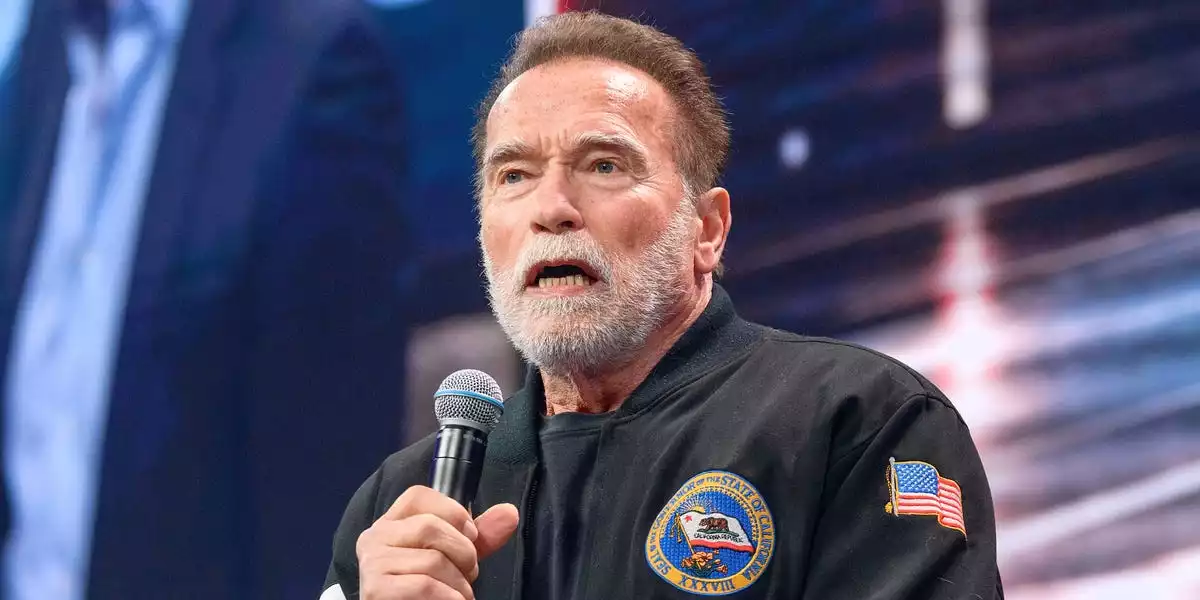

Schwarzenegger’s Shift: A Catalyst for the Longevity-Driven Fitness Economy
Arnold Schwarzenegger, once the global avatar of maximalist muscle culture, has quietly redefined the contours of strength training. His recent public embrace of a joint-conscious, machine-centric regimen is not mere celebrity rebranding—it is a seismic signal for the $100 billion strength-training and active-aging economy. In a world where the population is both aging and health-aspirational, Schwarzenegger’s pivot from iron-willed free-weight orthodoxy to a pragmatic, biomechanically assisted routine reflects a broader market evolution: from the pursuit of peak performance to the cultivation of sustainable longevity.
His narrative, blending personal adaptation with evangelism for exercise flexibility, dovetails with macroeconomic forces reshaping fitness, med-tech, and insurance. As musculoskeletal claims escalate and connected hardware platforms clamor for clinical validation, Schwarzenegger’s endorsement of “age-smart” training models is not just timely—it’s transformative.
Technology’s New Frontier: Machines, Data, and Personalized Longevity
The hardware revolution in strength training is unfolding at a breathtaking pace. Today’s biomechanically assisted resistance machines are no longer the clunky afterthoughts of yesterday’s gyms. They are embedded with sophisticated sensor arrays, capturing real-time data on range of motion, force output, and joint stress. Schwarzenegger’s migration to these devices underscores a latent, but rapidly growing, demand for equipment that minimizes injury risk while preserving the muscle-building stimulus that made him a legend.
- Digital Free Weights: Electromagnetic and motor-controlled resistance systems are projected to grow at an 18% CAGR, buoyed by the validation that machine-based volume can rival traditional lifting. This shift is particularly resonant for older demographics seeking strength gains without orthopedic compromise.
- Wearables and Predictive Analytics: The evolution from basic step counters to orthopedic early-warning systems is underway. These devices, coupled with AI-powered coaching overlays, can now flag aberrant loading patterns before pain manifests—translating expert heuristics into personalized micro-cues. The result: proper form and injury prevention, even outside the watchful eye of a trainer.
Schwarzenegger’s advocacy for lower-volume, maintenance-oriented programs is also reshaping the content and community landscape. Subscription-based platforms are emerging around “consistency” and “adherence” metrics, embedding social accountability features that echo his now-famous flat-tire anecdote: skip a session, and the system knows.
Market Dynamics: Insurance, Equipment, and the Longevity Dividend
The economic implications of this paradigm shift are profound. Musculoskeletal disorders remain the largest medical cost driver for self-insured employers, and insurers are taking note. The narrative of injury prevention through adaptive, machine-centric resistance training is accelerating the path toward reimbursement models reminiscent of cardiac rehab’s remote monitoring codes.
- Insurance & Employer Wellness: Expect to see insurers subsidizing digital strength programs that demonstrably reduce claims, with guided, sensor-enabled equipment at the core.
- Equipment Manufacturers: The consumer mindset is shifting from “hardcore lifting” to “joint-smart performance,” pressuring legacy vendors to embed sensors or partner with data platforms—or face commoditization. Mergers and acquisitions will intensify as incumbents seek to capture value beyond hardware margins.
- The Longevity Economy: Individuals over 50 now control 70% of disposable income in developed markets. Schwarzenegger’s reframing of strength training as a longevity asset class is expanding the total addressable market for products that deliver heavy-lifting benefits through lower-impact modalities.
For executives, the strategic imperatives are clear:
- Product Modularity: Design seamless transitions from free weights to assistive devices, mirroring Schwarzenegger’s adaptive approach.
- Data Governance: Treat biomechanical data as regulated health information, with transparency and compliance as differentiators.
- Brand Storytelling: Balance aspirational narratives with evidence-based injury mitigation to resonate across age brackets.
The Next Horizon: Healthcare Integration and Societal Impact
The convergence of fitness technology and healthcare is no longer speculative. FDA-cleared strength platforms, prescribing load parameters like statins, are on the horizon. Cross-industry consortia are laying the groundwork for standardized “digital dosing” of resistance training, leveraging EMR integration and tele-orthopedics.
- Adaptive Subscription Models: Hardware-as-a-Service will proliferate, with tiered pricing tied to real-time usage and recovery analytics. Behavioral economics—embedding loss aversion via missed sessions—will drive adherence and reduce churn.
- Socio-economic Ripple Effects: As lifelong strength training becomes normalized, age-related disability curves may compress, impacting workforce participation and retirement planning. Asset managers are already modeling these healthspan extensions when pricing annuities and long-term care products.
- Competitive Landscape: Traditional gyms face disintermediation unless they evolve into data-rich, concierge-style wellness hubs. Meanwhile, tech-forward home solutions must solve for engagement decay, making hybrid ecosystems—blending physical and digital experiences—the likely future winners.
Schwarzenegger’s evolved philosophy is more than personal reinvention; it crystallizes a pivotal industry inflection. Functionality and joint longevity now rival raw intensity in consumer value hierarchies. The companies that operationalize this insight—through sensor-enabled machines, AI personalization, and adherence economics—will define the next era at the intersection of biomechanics, data science, and age-agnostic aspiration.

 By
By
 By
By

 By
By
 By
By


 By
By