


An inflation surprise with a familiar culprit: energy’s return to the driver’s seat
April’s U.S. inflation print delivered a clear message to markets and boardrooms alike: disinflation is not a straight line when geopolitics reprice energy overnight. Headline CPI rose 3.8% year-over-year and 0.6% month-over-month, the strongest annual pace since 2023, with energy costs up 17.9% y/y. Even the more policy-relevant core CPI—which strips out food and energy—came in 2.8% y/y and 0.4% m/m, slightly above expectations and uncomfortably firm for a Federal Reserve that has been trying to keep inflation expectations anchored.
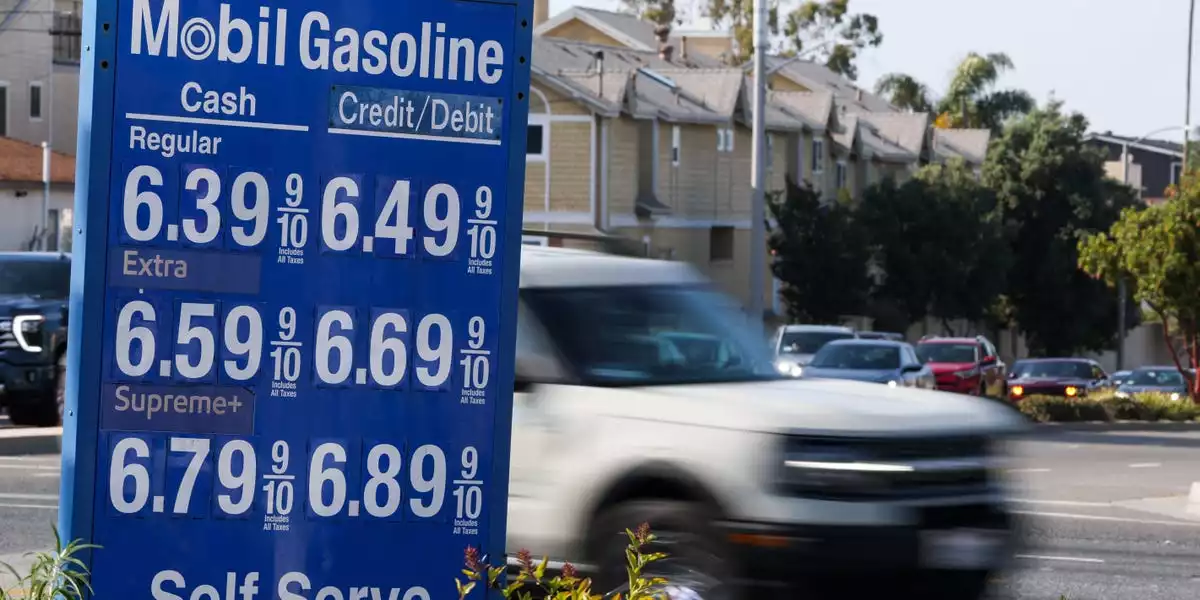
The immediate accelerant is the Middle East risk premium, as the flare-up involving Iran has pushed gasoline prices up 28.4% y/y, lifting the national average to roughly $4.50 per gallon from just under $3.00 in late February. That kind of move is not merely a consumer inconvenience; it is a macro transmission mechanism. Energy feeds directly into household budgets and indirectly into nearly every supply chain—freight, packaging, petrochemical inputs, and the cost base of energy-intensive production.
For corporate leaders, the key takeaway is structural rather than episodic: energy volatility has reasserted itself as a core operating variable, not a background line item. The inflation surprise is therefore less about a one-month data point and more about the re-emergence of a regime where geopolitics can quickly overwhelm incremental productivity gains or pricing discipline.
Real income compression meets a bifurcated consumer—and a tougher demand-mix puzzle
The inflation uptick is landing at a delicate moment for households. Real earnings fell 0.5% m/m and 0.3% y/y, and the University of Michigan’s consumer-sentiment index dropped to 48.2 in May—an extreme reading that signals broad-based pessimism until energy prices stabilize. When gasoline spikes, it behaves like a highly visible “tax,” particularly for commuters and regions with limited public transit options.
What is emerging is a sharper segmentation of demand—one that consumer-facing companies will need to model with more precision:
- Higher-income households often absorb price increases with less behavioral change, sustaining discretionary categories and premium offerings.
- Lower-income households tend to respond immediately by cutting trips, carpooling, shifting to mass transit where possible, and trading down across retail baskets.
- Middle-income households become the swing cohort, alternating between selective splurges and abrupt pullbacks depending on weekly fuel and grocery bills.
This bifurcation creates a demand-mix challenge for retailers, consumer packaged goods firms, and travel-related businesses. Volume may soften in mass-market segments even as premium lines remain resilient—an outcome that can distort topline signals and complicate inventory planning. In this environment, competitive advantage increasingly comes from customer value engineering, including:
- Tiered assortments (good/better/best) that make trade-down frictionless without eroding brand equity
- Loyalty programs that convert price sensitivity into retention and data-driven personalization
- Dynamic pricing and promotions tied to local demand elasticity and real-time cost inputs
- Omnichannel execution that reduces fulfillment costs while preserving convenience
The strategic nuance is that “the consumer” is no longer a single story. It is a portfolio of micro-economies, each reacting differently to energy-driven inflation.
Monetary policy on hold, but not benign: the cost of capital stays elevated
With inflation proving sticky and the labor market still strong, the Federal Reserve is widely expected to hold rates steady in mid-June under incoming Chair Kevin Warsh. Yet the more consequential signal is forward-looking: the door remains open to additional tightening next year if inflation fails to cool decisively. For capital markets, that implies a longer period in which discount rates remain restrictive and risk appetite becomes more selective.
For CFOs and corporate development teams, elevated rates reshape decision-making in practical ways:
- Higher hurdle rates and more conservative valuation models, particularly for long-duration growth projects
- A tilt toward cash-flow durability over expansion narratives that depend on cheap financing
- M&A discipline, favoring bolt-on acquisitions with clear integration paths rather than leverage-heavy transformational deals
- Greater emphasis on liquidity buffers, covenant testing, and refinancing timelines
This matters acutely for growth-oriented sectors such as SaaS and high-multiple technology, where future cash flows are discounted more heavily in a higher-rate environment. Investors and acquirers are likely to reward businesses that can demonstrate near-term margin expansion—especially when that expansion is tied to measurable cost-out levers rather than optimistic demand assumptions.
Technology and energy resilience converge: operational hedges become strategic imperatives
The most actionable corporate response to energy-driven inflation is not simply cost cutting; it is building resilience into operations. Energy-intensive industries—chemicals, metals, freight transport, and large-scale manufacturing—face margin compression unless they can hedge effectively or pass costs through. But pass-through is harder when consumers are already showing stress, which elevates the importance of structural efficiency.
In that context, technology adoption becomes a pragmatic inflation hedge. High-ROI priorities increasingly include:
- AI-driven predictive maintenance to reduce downtime and energy waste in factories
- Real-time energy management systems that optimize consumption across sites and shift loads where feasible
- Advanced supply-chain analytics to reroute logistics, manage inventory risk, and reduce expedited shipping
- Automation and workforce optimization to offset wage and input cost pressures
- Cloud migration and modernization to lower infrastructure costs and improve scalability under demand volatility
At the same time, decarbonization is being reframed from a long-horizon ESG narrative into near-term risk management. On-site generation, renewable procurement, and pilots in alternative fuels are increasingly justified as hedges against fossil-fuel shocks—often with the added benefit of tax incentives and improved stakeholder confidence.
Boards now face a governance-level requirement: embed dual scenario planning—one case where oil stabilizes near current levels, another where prices rise 15–25%—while also modeling a “higher for longer” or renewed-tightening rate path. Companies that treat geopolitics, energy, and financing conditions as a single interconnected system will be better positioned to protect margins, defend demand, and invest through volatility rather than merely endure it.

 By
By
 By
By
 By
By

 By
By
 By
By
 By
By
 By
By







