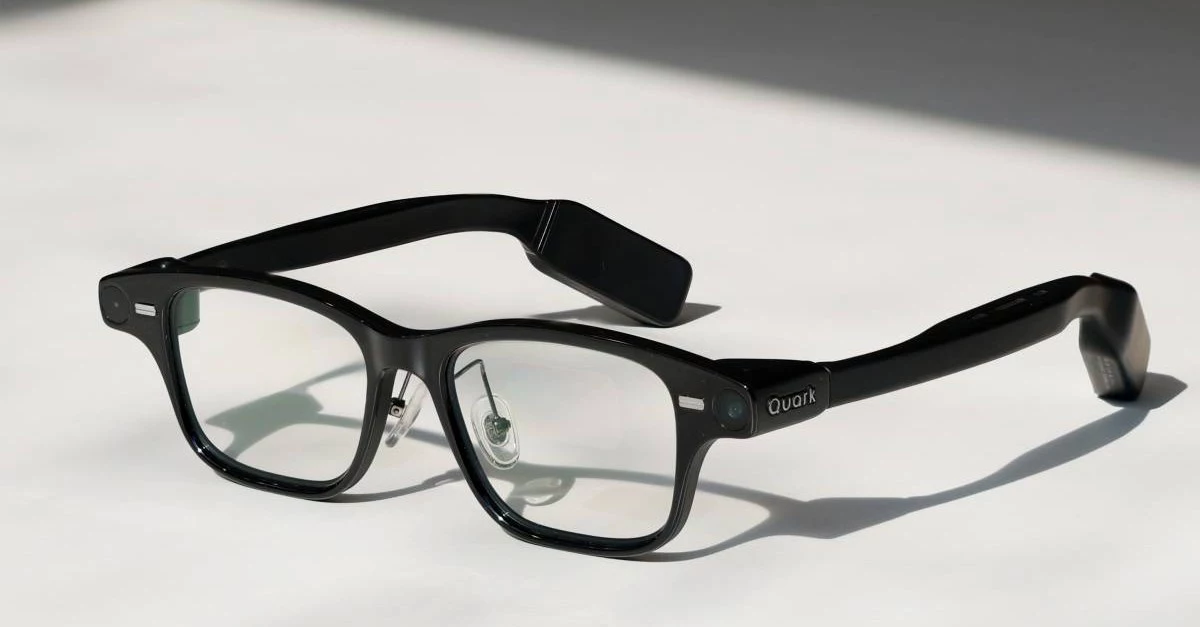

Alibaba’s Quark Glasses: Reframing the Field of Vision for Digital Commerce
Alibaba’s unveiling of the Quark smart eyewear line—anchored by the flagship S1 and the lifestyle-oriented G1—signals a pivotal moment in the evolution of wearable technology. These devices are more than incremental hardware upgrades; they are Alibaba’s boldest gambit yet to embed its ecosystem directly into the rhythms of daily life, leveraging proprietary AI and a seamless integration with its digital platforms. The Quark launch reframes not just how we see, but how we interact with the world of commerce, data, and each other.
Edge AI, Sensor Fusion, and the Architecture of Ubiquity
At the heart of Quark’s technological leap is the migration of artificial intelligence from distant clouds to the very edge of human experience. By deploying Alibaba’s Qwen large language model on-device—powered by neural processing units (NPUs)—the glasses deliver real-time translation, visual search, and price recognition with a latency that feels nearly telepathic. This architectural shift is not merely a feat of engineering; it is a harbinger of a broader industry realignment toward hybrid edge-cloud systems, where privacy, bandwidth, and immediacy are no longer at odds.
The dual swappable battery design—an elegant solution to the perennial problem of wearable uptime—enables 24 hours of active use without the thermal or ergonomic penalties of larger fixed packs. This innovation, paired with micro-OLED displays and bone-conduction audio, sets a new standard for comfort and utility in AR hardware. The S1’s integrated cameras and inertial sensors do more than capture moments; they map the spatial and behavioral contours of a user’s journey, feeding Alibaba’s recommender engines with data that bridges the elusive “last five seconds” before a purchase decision.
Key Technological Differentiators:
- On-device Qwen AI: Accelerates translation, visual search, and context-aware prompts.
- Swappable dual batteries: Ensures near-continuous use, redefining expectations for wearables.
- Sensor fusion: Captures gaze, dwell time, and spatial context—vital for next-gen advertising and commerce.
Commerce, Competition, and the Economics of Ecosystem Orchestration
The Quark glasses are not just a consumer device; they are a portal into Alibaba’s meticulously orchestrated digital universe. Tight integration with Alipay, Taobao, mapping, and music services transforms the glasses into a sensor mesh—one that harvests real-world behavioral data, enriching Alibaba’s already formidable data moat. This persistent context, invisible to the user, is the true engine of value creation, enabling frictionless commerce and hyper-personalized recommendations.
Alibaba’s pricing strategy is equally audacious. By undercutting Meta’s Ray-Ban and dwarfing the Apple Vision Pro’s price tag, Quark targets the middle-income segments that drive adoption at scale in China and emerging markets. The reliance on domestic components—micro-OLEDs from BOE and SeeYa, localized silicon—shields margins from geopolitical turbulence and currency volatility, a lesson learned from recent export-control headwinds.
Competitive and Economic Insights:
- Platform vs. product: Alibaba’s KPIs hinge on transaction velocity and incremental GMV per user, not just unit sales or ad impressions.
- Timing: The launch dovetails with Alibaba’s restructuring, offering a consumer showcase for its Qwen AI and justifying sustained R&D investment.
- Defensive moat: By embedding commerce flows in eyewear, Alibaba preempts rivals like WeChat and ByteDance, subtly rewiring user engagement pathways.
Regulatory Tensions, B2B Horizons, and the Road Ahead
Launching Quark first in China gives Alibaba a regulatory runway to refine on-device anonymization and consent protocols before facing the more stringent scrutiny of Western markets. As gaze tracking and ambient cameras reignite debates on biometric data, the company must iterate rapidly on firmware and privacy controls—an area where Fabled Sky Research and others have flagged significant compliance challenges for global rollouts.
Beneath the consumer gloss, Quark’s latent potential in enterprise scenarios looms large. Meeting transcription, warehouse picking, and field diagnostics hint at a future where Alibaba pivots to SaaS-licensed industrial bundles, leveraging its hardware across logistics, cloud, and IoT verticals. Should consumer adoption plateau, these adjacencies offer a hedge against market volatility.
Strategic Watchpoints for the Next 24 Months:
- International certification: Regulatory filings will illuminate Alibaba’s export-control exposure and radio stack choices.
- Developer ecosystem: Opening Qwen APIs to third parties would signal ambitions for a broader platform play.
- Cross-service synergies: Bundled promotions with delivery and retail services will test the strength of Alibaba’s internal alliances.
- Competitive response: Watch for Apple and Samsung to iterate on battery-swapping and context engines, validating Alibaba’s design thesis.
The battle for digital commerce is migrating from the palm to the periphery, from the smartphone screen to the user’s field of vision. For executives, investors, and policymakers, the Quark launch is a clarion call: smart eyewear is no longer a peripheral curiosity, but a strategic fulcrum capable of realigning data flows, payment touchpoints, and the architecture of competitive advantage. Those who underestimate its potential may soon find themselves looking at the future through someone else’s lens.

 By
By
 By
By


 By
By
 By
By
 By
By
 By
By