
Scorsese’s AI Storyboarding Bet Signals a New Phase of Creative-Tech Convergence
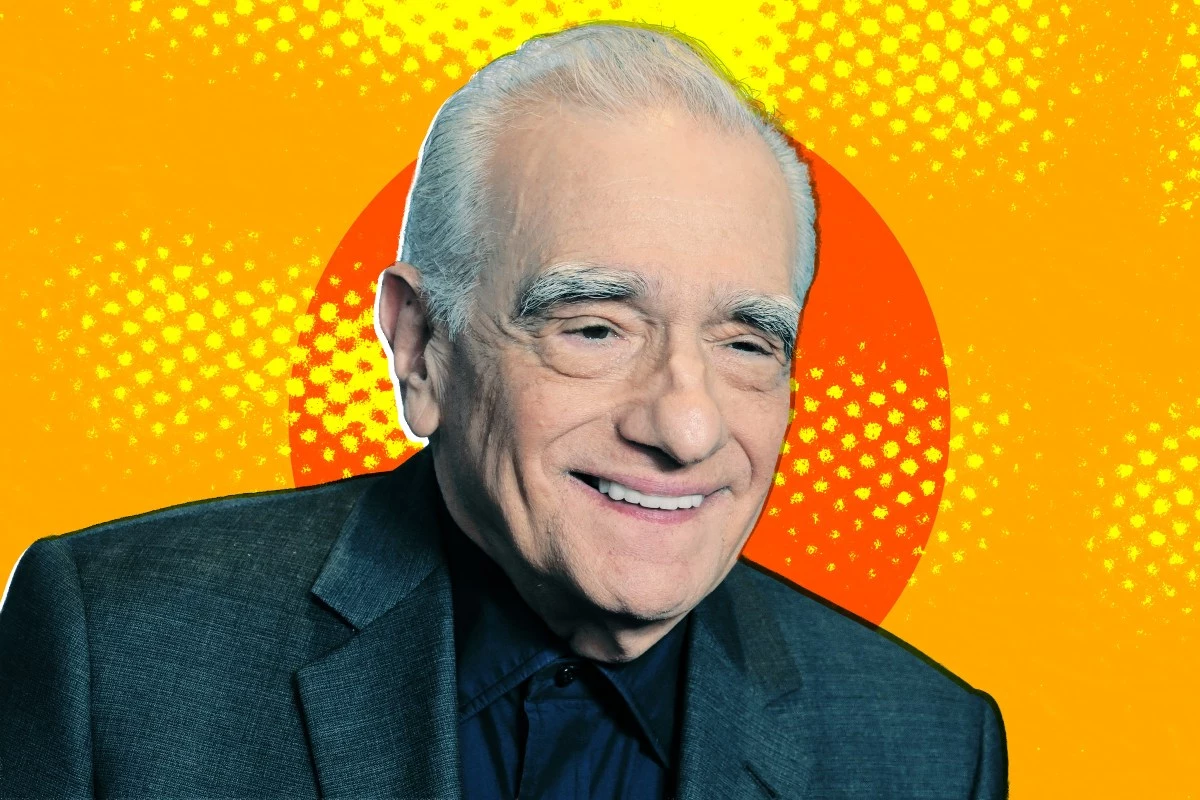
Martin Scorsese’s decision to formalize a partnership with Black Forest Labs, an AI image-generation startup, is more than a celebrity-tech endorsement—it is a high-visibility test case for how generative AI in filmmaking may be normalized inside elite creative workflows. Reported via *The New York Times* and reinforced through a promotional video, the arrangement positions Scorsese not only as a user but as a partner and adviser, suggesting a deeper strategic alignment than a typical software trial.
At the practical level, Scorsese is framing the technology as an acceleration layer for a familiar task: storyboarding—the translation of narrative intent into camera language, blocking, and mood. In his telling, AI does not replace his vision; it helps him communicate it faster and with greater specificity to cast and crew. That distinction matters because storyboards are not merely drawings; they are a production instrument that reduces ambiguity, aligns departments, and prevents costly misinterpretation once a set is built and a crew is on the clock.
The backlash, however, has been immediate and intense. Many filmmakers, storyboard artists, critics, and fans interpret any embrace of generative AI as an endorsement of a system that could erode creative labor markets, weaken craft traditions, and introduce ethically contested training-data practices into the heart of cinema. Scorsese’s stature amplifies the stakes: if a director synonymous with auteur-driven filmmaking adopts AI, the move can be read as a cultural permission slip for studios to follow.
From Sketch to Screen: What AI Image Generation Changes in Preproduction Economics
The strongest business case for AI storyboarding is not aesthetic novelty; it is cycle-time compression. Preproduction is where creative intent meets budget reality, and storyboards sit directly on that fault line. AI image generation can rapidly produce visual options for:
- Framing and composition experiments (wide vs. close, lens feel, perspective)
- Lighting and tonal studies to establish mood early
- Location and set visualization before expensive scouting or builds
- Continuity exploration across sequences to reduce downstream revisions
For studios and producers, the appeal is straightforward: faster iteration can translate into lower preproduction costs and fewer late-stage changes. The provided material suggests early adopters could see 20–30% savings in preproduction expenses—an estimate that, while context-dependent, aligns with how automation typically creates ROI: not by eliminating creativity, but by reducing the number of paid hours required to reach a “production-ready” plan.
Yet the economic story is inseparable from labor dynamics. Traditional storyboard artists are vulnerable to rate pressure if studios treat AI outputs as “good enough” substitutes. At the same time, the technology’s limitations—especially around nuanced human gesture, emotional specificity, and iterative director-artist dialogue—make a full replacement model unlikely in the near term for high-end productions. A more plausible trajectory is a hybrid workflow, where human artists shift toward higher-leverage responsibilities such as:
- Visual continuity and narrative clarity oversight
- AI-assisted iteration and refinement
- Cinematography-aligned previsual planning
- Prompt and reference curation as a specialized craft
This mirrors earlier creative-industry transitions. Digital photography and CAD did not eliminate photographers or architects; they redefined professional baselines, rewarded new technical fluency, and created new specializations. The disruption, however, was still disruptive—particularly for mid-career practitioners without structured pathways to reskill.
The Talent Backlash Is Also a Governance Story: IP, Consent, and Trust
The controversy surrounding Scorsese’s partnership is not only about tools; it is about legitimacy. Generative AI raises unresolved questions that directly affect studios, unions, and audiences:
- Copyright and training data: If models are trained on film stills, artwork, or proprietary designs, rights holders will demand clearer licensing, attribution, and compensation mechanisms.
- Ownership of outputs: Contracts must specify who owns AI-generated storyboard assets, how they can be reused, and whether they become part of a studio’s long-term IP library.
- Creative consent and labor ethics: Guilds and unions are increasingly focused on whether AI adoption becomes a backdoor to devaluing human contribution.
Regulation is moving from background noise to operational constraint. Frameworks such as the EU AI Act and emerging U.S. guidelines will shape what “responsible use” means in practice—particularly around transparency, provenance, and accountability. For global productions, compliance will not be optional; it will be a cost center and a reputational risk factor.
Audience sentiment adds another layer. Viewers remain split: some embrace hyperreal, AI-assisted imagery; others prioritize the authenticity of human-made art. That tension is not abstract. It affects brand equity, awards narratives, and the marketing calculus of whether a production highlights AI as innovation or downplays it as mere workflow infrastructure.
Competitive Pressure Will Push Studios Toward Hybrid Teams—Whether They Admit It or Not
Scorsese’s move lands at a moment when streaming economics reward speed-to-market and visual differentiation. Studios competing on volume and novelty will be tempted to operationalize AI across development, previsualization, localization, and even editorial experimentation. A high-profile director adopting AI storyboarding increases the probability that executives treat these tools as strategic infrastructure, not creative indulgence.
The most durable path forward is likely not “AI replaces artists,” but AI reorganizes teams. Media companies that navigate this transition effectively will do a few things well:
- Build integrated pods combining storyboard artists, cinematographers, and AI-capable visual developers
- Fund upskilling and reskilling so craft expertise remains inside the pipeline rather than being priced out
- Rewrite contracts around model use, data provenance, and revenue participation
- Engage unions and creative communities with transparent guardrails rather than silent adoption
Scorsese’s partnership with Black Forest Labs functions as a bellwether: it shows how quickly generative AI is moving from experimental novelty to executive-level workflow choice. The industry’s next chapter will be written less by the loudest arguments for or against AI, and more by the rigor of the governance, labor strategy, and creative standards that determine whether speed and efficiency can coexist with trust and artistic integrity.

 By
By

 By
By

 By
By
 By
By

 By
By