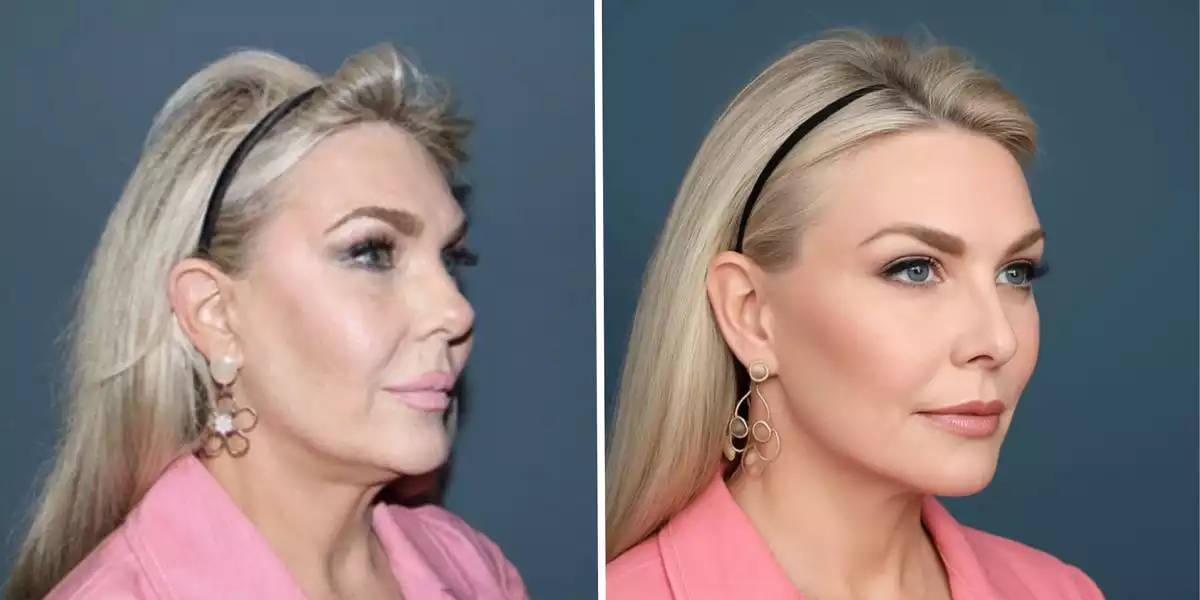

AI “Inspiration” Images Enter the Exam Room—And Redefine the Consultation
A subtle but consequential shift is underway in cosmetic dermatology and aesthetic surgery: patients are arriving not with magazine clippings or celebrity references, but with AI-generated faces—hyper-stylized renderings that borrow from “doll-like” internet aesthetics and algorithmic ideals. These images can be strikingly persuasive, not because they reflect what a specific patient could look like, but because they present a frictionless fantasy of transformation: larger eyes, tighter contours, smoother skin, and age reversal without trade-offs.
Clinicians are increasingly describing a new kind of preoperative conversation—one where the first task is not selecting a procedure, but translating an AI concept into anatomical reality. A survey from Beth Israel Deaconess Medical Center adds empirical weight to what many practices report anecdotally: patients who use AI-enhanced photos tend to hold significantly higher expectations for surgical outcomes. That expectation inflation matters, because aesthetic medicine is uniquely exposed to perception risk: satisfaction is shaped not only by technical success, but by whether the result matches the patient’s internal “target image.”
The emerging dynamic is not simply “patients want more.” It is that AI images can redefine what “more” looks like, shifting the baseline of plausibility in ways that traditional reference photos rarely did.
—
The Physics Problem: Generative AI Can Imagine Beauty, Not Engineer Tissue
Generative image models excel at producing outputs that are visually coherent and emotionally compelling. What they do not do—at least not in their consumer-facing form—is incorporate the constraints that govern real bodies: skin elasticity, scarring tendencies, vascular supply, bone structure, muscle attachments, and the mechanics of healing. The result is a widening gap between aesthetic plausibility (what looks believable in a picture) and biomechanical feasibility (what can be done safely and predictably).
Physicians cited in the material—such as Drs. Westbay, Williams, and Shridharani—frame AI as potentially useful for communication, but fundamentally incomplete as a planning tool. The clinical critique is consistent across specialties:
- AI images are not patient-specific: they typically ignore individual anatomy, age-related tissue changes, and prior procedures.
- They can flatten ethnic and anatomical diversity into a narrow set of algorithmically reinforced “ideal” traits.
- They omit trade-offs that are central to informed consent—scars, swelling, asymmetry risk, and the limits of revision surgery.
- They can imply reversibility (“time-machine” outcomes) that medicine cannot ethically promise.
The case studies underscore the point. Patients in their sixties and seventies are using AI to visualize dramatic rejuvenation. Yet some of the most common AI-driven requests—such as dramatic eye enlargement—are not merely difficult; they can be unsafe. One patient’s ChatGPT-generated deep-plane facelift visualization bore little resemblance to her actual postoperative outcome, which she ultimately preferred for its naturalness. That detail is telling: the best clinical results often aim for believability and harmony, while AI outputs often optimize for impact and exaggeration.
This is the core tension: generative AI is trained to satisfy the prompt, not to respect anatomy.
—
Market Incentives and Liability Exposure in a $50B+ Aesthetic Economy
The business implications are substantial. With the global aesthetic and reconstructive surgery market projected to exceed $50 billion by 2028, AI-driven visualization is poised to become a competitive differentiator—both as a patient acquisition tool and as a premium service layer. A plausible near-term business model is emerging: “cosmetic planning as a service,” where clinics and med-tech vendors bundle AI simulations, telehealth consults, and procedure pathways into a streamlined funnel.
But the same tools that attract patients can also increase operational and legal risk if they amplify unrealistic expectations. The expectation gap can translate into:
- Higher revision rates, with associated cost and reputational burden
- More disputes over “promised” outcomes, especially when AI images are treated as quasi-contractual targets
- Increased malpractice exposure, where dissatisfaction is reframed as misrepresentation
- Brand erosion, as before/after narratives compete with AI “after” fantasies circulating online
Clinics that ignore the trend may lose digitally native patients who expect visualization as part of the buying journey. Clinics that embrace it without guardrails may inherit a different risk: a pipeline of patients whose goals were shaped by tools that do not disclose constraints.
The strategic middle path is becoming clearer: adopt AI as a communication aid, but embed it in a governance framework that treats visualization as education, not prediction.
—
What Responsible AI Adoption Looks Like for Cosmetic Surgery and Dermatology
The next phase will be defined by whether the industry can convert AI from a source of distortion into a source of clarity. Several practical moves stand out as likely best practices—especially as regulators and medical boards accelerate guidance on AI in healthcare, mirroring broader scrutiny seen in AI diagnostics and telepsychiatry.
Clinics and vendors that want durable advantage are likely to prioritize:
- Anatomically informed simulation: moving toward “digital twin” approaches trained on anonymized 3D imaging and real outcome data, rather than purely aesthetic generation
- Expectation-management protocols: standardized intake questions, documented goal alignment, and explicit language distinguishing “inspiration” from “achievable result”
- Bias and representation controls: ensuring tools do not default to narrow beauty templates that erase ethnic and anatomical diversity
- Telehealth integration with guardrails: using AI-enhanced virtual consults to expand reach while preserving informed consent and clinical realism
- Outcome measurement: tracking satisfaction, revision rates, and complaint patterns to understand whether AI usage improves education—or inflates disappointment
There is also a constructive expansion path beyond elective aesthetics. AI simulation could meaningfully support reconstructive planning—trauma, oncology, congenital differences—where realistic previews can reduce anxiety and improve shared decision-making. That is where AI’s persuasive power may be most ethically aligned: not selling perfection, but improving understanding.
Aesthetic medicine has always balanced aspiration with anatomy. AI doesn’t remove that balance; it raises the stakes—because the “before” is real, the “after” is imagined, and the clinic is where imagination must finally meet physics.

 By
By
 By
By

 By
By

 By
By
 By
By
 By
By