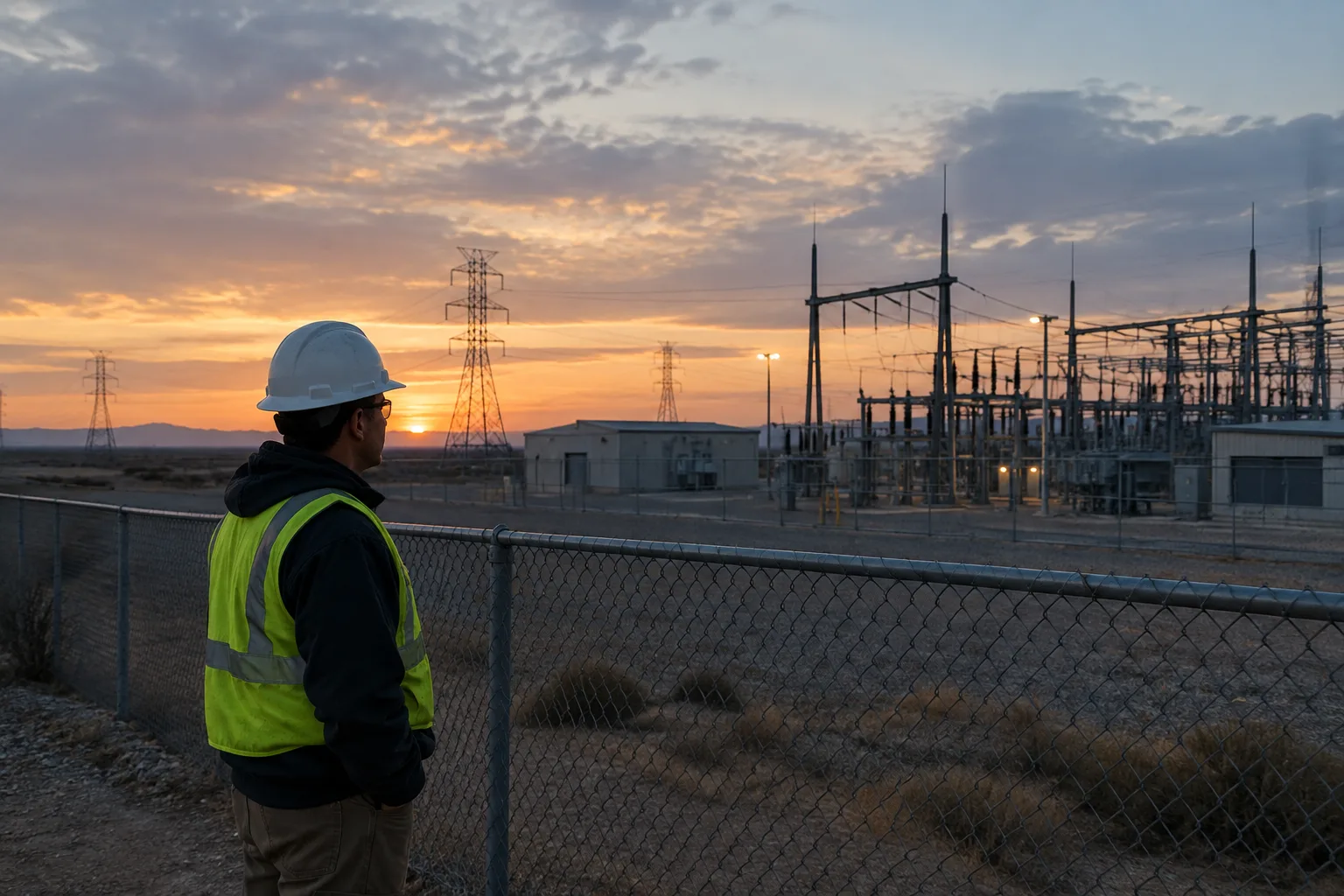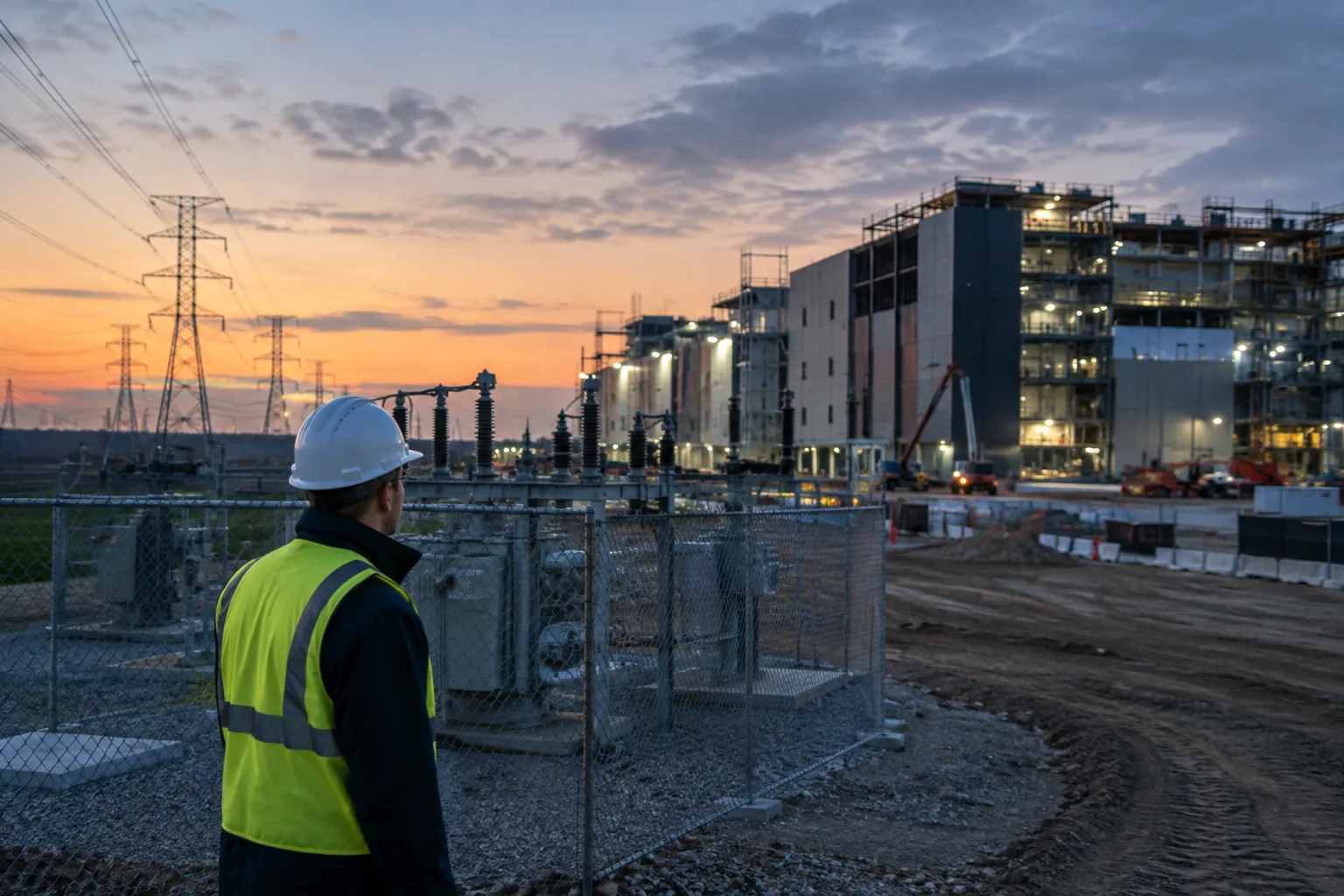

Lake Tahoe’s power reallocation becomes a stress test for the AI data center era
The Lake Tahoe region is emerging as a vivid case study in how AI-driven data center growth is reshaping electricity planning, reliability expectations, and community trust. NV Energy, the primary utility on the Nevada side, is set to terminate service to roughly 49,000 residents by May 2027, redirecting capacity toward hyperscale computing facilities. On the California side, Liberty Utilities—reportedly dependent on NV Energy for about 75% of its supply—faces a stark alternative: fund new sourcing and interconnection pathways that could cost hundreds of millions of dollars, a scale of investment that is difficult to execute quickly under typical regulatory and permitting timelines.
The dispute is not merely a local reliability controversy; it is a signal that legacy grid assumptions are colliding with a new class of industrial load. Data centers already represent around 22% of Nevada’s generation capacity, with projections suggesting they could reach 35% by 2030 if growth continues unchecked. That trajectory forces a fundamental question for regulators and utilities: when electricity demand expands faster than transmission and generation can be built, who gets priority—and under what rules?
Local stakeholders have criticized the compressed timeline and the perceived absence of contingency planning. NV Energy, for its part, frames the shift as a long-planned transition rather than a response to public pressure. Regardless of intent, the practical outcome is the same: residential continuity is being weighed against the economic gravity of AI infrastructure, and the region’s cross-border utility dependencies are turning that trade-off into a governance challenge.
Why AI compute loads break traditional grid planning models
What makes AI data centers different is not simply that they use a lot of electricity—it’s the density, volatility, and clustering of their demand. Next-generation AI training and inference workloads concentrate power draw per rack, while specialized accelerators and high-performance cooling systems intensify the load profile. As chip-level efficiency gains slow relative to demand growth, operators often scale by building larger facilities, not merely better ones.
Several infrastructure dynamics are converging in Lake Tahoe-like regions:
- Load “hot spots” on transmission networks: Hyperscale campuses can create localized demand spikes that overwhelm substations and transmission corridors designed for slower, more predictable growth.
- Forecasting gaps: Traditional load forecasting—built around population growth, seasonal patterns, and incremental commercial expansion—struggles with the step-change nature of data center deployments.
- Cooling-driven peak demand: Advanced cooling (including liquid and immersion approaches) can reduce some overhead, but high-density compute still tends to amplify peak loads, especially during heat events.
- Time-to-build mismatch: Data centers can be permitted and constructed faster than major transmission upgrades, creating a structural lag where compute arrives before capacity.
This is why the Lake Tahoe episode resonates beyond the region: it illustrates how AI infrastructure can outpace the grid’s ability to expand, forcing difficult allocation decisions that utilities and regulators have historically avoided.
The regulatory and economic fault lines: rate equity, cross-border oversight, and social license
The Lake Tahoe situation also highlights how utility economics and jurisdictional boundaries can magnify technical constraints into political flashpoints. Liberty Utilities’ dependence on NV Energy underscores a broader vulnerability: when one service territory relies heavily on another’s supply, a capacity reallocation can quickly become an existential reliability issue.
Key pressure points include:
- Cost allocation and tariff design: Large data centers often negotiate specialized rate structures—sometimes including discounted or interruptible arrangements—while grid upgrades are socialized across broader rate bases. Even when such deals are lawful, they can trigger perceptions that residents subsidize industrial growth.
- Dual-regulator complexity: Cross-jurisdictional service touches multiple oversight regimes (e.g., California and Nevada regulators), each with distinct reliability standards, decarbonization mandates, and consumer protection frameworks. This can slow approvals for new supply and inflate costs through extended review cycles.
- Decarbonization versus reliability trade-offs: As states pursue renewable targets, the system increasingly values dispatchable capacity, storage, and flexible demand. Data centers can be compatible with clean energy goals via long-term power purchase agreements (PPAs), but PPAs do not automatically solve local transmission constraints.
- Social license risk: Public backlash—captured in sentiments like “it’s like we don’t exist”—signals reputational exposure for utilities and technology firms alike. Once community trust erodes, even technically sound plans can become politically brittle.
For business and technology leaders, the lesson is clear: energy is now a site-selection and operational risk variable, not a background assumption. For regulators, the moment calls for sharper definitions of essential service obligations and clearer rules for how large new loads must contribute to the infrastructure they require.
What stakeholders can do next: from microgrids to “pay-for-impact” grid expansion
The most constructive path forward is likely to be a portfolio approach that blends grid expansion, distributed energy resources (DERs), and demand flexibility, while modernizing the regulatory toolkit to reflect AI-era realities.
Practical options gaining urgency include:
- Utility–hyperscaler co-investment models: Utilities can negotiate agreements where data center operators help finance transmission and substation upgrades in exchange for service guarantees, reducing the risk that residential customers absorb disproportionate costs.
- Behind-the-meter resilience: Solar, battery storage, and localized generation can buffer communities and critical services. In constrained regions, microgrids—paired with modern controls—can provide islanding capability during shortages or disruptions.
- Advanced cooling and load shaping: Data centers can deploy liquid cooling, thermal storage, and dynamic workload scheduling to flatten peaks, potentially participating in demand response or ancillary services markets.
- New market mechanisms: Capacity and flexibility products—where large loads pay for reliability attributes—could better align private incentives with public reliability needs.
- Stronger minimum service standards: Regulators may consider guardrails that prevent residential displacement without enforceable mitigation, requiring large new loads to internalize more of the system impact they create.
Lake Tahoe’s power dispute is not an isolated anomaly; it is a preview of how AI data center electricity demand, grid constraints, and public accountability will intersect across North America. The regions that navigate this transition best will be those that treat energy planning as strategic infrastructure policy—pairing innovation with equity, and scaling compute without compromising the basic promise that the lights stay on for the communities that host it.

 By
By
 By
By



 By
By
 By
By
 By
By