
ChromeOS Reimagined: The Quiet Revolution in Operating Systems
Google’s latest ChromeOS update arrives not with bombast, but with the kind of deliberate, structural recalibration that signals a tectonic shift beneath the familiar surface of laptops and workstations. The headlines—Desk sync, AI-powered personalization, on-device intelligence—may sound like incremental conveniences. Yet, beneath this veneer, ChromeOS is being meticulously recast as the operating system for a workforce that is mobile, collaborative, and increasingly AI-augmented.
Desk Sync and the Architecture of Seamless Mobility
At the heart of this release lies Desk sync, a feature that does more than merely shuttle browser tabs between machines. By synchronizing entire workspaces—windows, cookies, and session states—across authenticated ChromeOS devices, Google is quietly redrawing the boundaries of device continuity. This is no longer the exclusive domain of Apple’s Continuity or Microsoft’s cloud-bound Windows 365. Instead, ChromeOS is asserting itself as the connective tissue for organizations where employees float between shared devices, hot desks, and remote workstations.
- Federated Workspace Portability: Desk sync’s architecture leverages Google’s back-end to create a persistent, encrypted workspace that follows the user, not the device. This is a subtle yet profound shift, especially for industries—healthcare, hospitality, manufacturing—where device-per-employee ratios are low and shift handovers are frequent.
- Security by Design: The opt-in nature and per-profile encryption address the ever-present specter of enterprise data leakage, aligning with zero-trust mandates and rigorous compliance frameworks.
The implications are far-reaching: downtime shrinks, device pools can be streamlined, and the very notion of a “personal computer” is redefined for a world of shared, transient endpoints.
Ambient AI: From Wallpaper to Workflow
Perhaps the most intriguing element of the update is how AI seeps into the OS fabric—not as a bolt-on assistant, but as an ambient, generative presence.
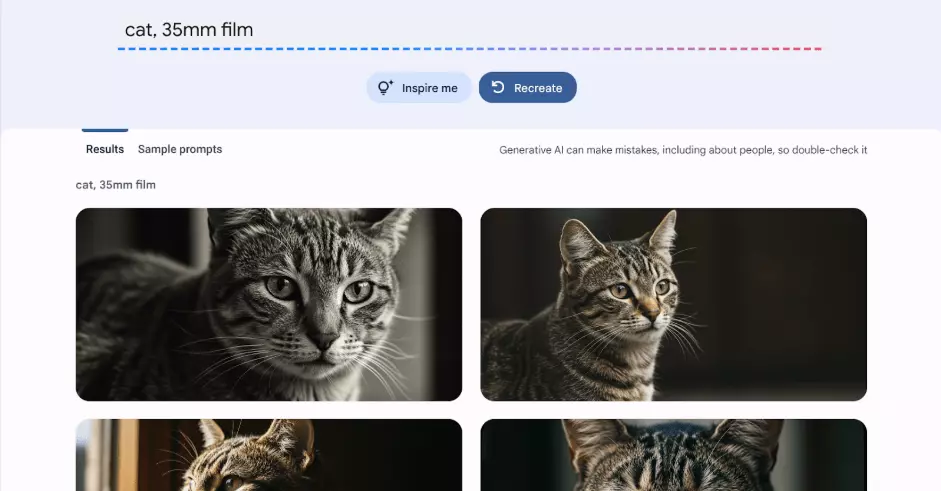
- Generative UI: Free-form AI wallpapers nudge generative models out of the search box and into the daily lived environment of users. This is more than aesthetic—it’s a low-friction, habit-forming exposure to co-creation, a trend that product strategists would do well to watch.
- Assistive Intelligence: “Help me read” leverages domain-specific summarization, pointing to a future where ChromeOS becomes a silent partner in vertical workflows—be it parsing medical charts or distilling maintenance manuals.
- Multimodal Search at OS Scope: With Lens integrated at the operating system level, Google is lowering the barrier to multimodal search, reinforcing its core business from a new and potentially lucrative entry point.
These features, while subtle, are foundational. They signal Google’s intent to move AI from the cloud into the device, from the abstract into the everyday.
Economic Realignment and Strategic Positioning
The ChromeOS update is as much about economics as it is about engineering. Chromebooks have long been the cost-effective alternative in enterprise rollouts, boasting a total cost of ownership that undercuts traditional Windows devices by 30–50%. Desk sync amplifies this advantage, reducing the friction and expense of device rotation in shift-based environments.
- Premium Tiering: The introduction of “Chromebook Plus” marks a strategic pivot. Where ChromeOS hardware once competed on price, the Plus moniker signals a move upmarket, giving OEMs like HP, Lenovo, and Acer license to upsell AI capabilities and stabilize margins in a cooling PC market.
- Competitive Dynamics: Google’s approach diverges from Microsoft’s cloud-centric Windows 365 and Apple’s tightly integrated ecosystem. ChromeOS is staking its claim as the OS for heterogenous, fleet-managed environments—an appealing proposition for IT departments wary of vendor lock-in.
- Data Network Effects: Every synced session and AI interaction feeds Google’s telemetry, enhancing model training and expanding monetizable surface area—without the need for explicit ad inventory growth.
The Road Ahead: AI at the Edge, Regulatory Headwinds, and New Value Propositions
Looking forward, ChromeOS is poised to become a proving ground for on-device AI inference, particularly on higher-spec Chromebook Plus models. This localizes intelligence, reducing latency and addressing data sovereignty concerns in regions like Europe and APAC. The prospect of bundled subscriptions—ChromeOS paired with Gemini for Workspace—echoes Microsoft’s Copilot strategy, hinting at new recurring revenue streams beyond advertising.
Strategic integrations with vertical platforms—EHRs in healthcare, PMS in hospitality, MES in manufacturing—could further entrench ChromeOS in specialized workflows. Yet, these ambitions must navigate the regulatory shoals of the EU’s Digital Markets Act, which scrutinizes the bundling of services and the preservation of user choice.
In a climate of constrained IT budgets and deferred Windows refresh cycles, ChromeOS’ renewed efficiency narrative positions it as a pragmatic hedge. The update is more than a feature release; it is a declaration of intent—a marker in the race to embed generative and assistive intelligence directly into the operating systems that underpin modern work. For executives, strategists, and investors alike, the message is clear: the era of the AI-native OS has quietly, but unmistakably, arrived.

 By
By
 By
By
 By
By
 By
By
 By
By

 By
By
 By
By