


A sudden chill in AI exuberance reshapes billionaire balance sheets
The 2026 pullback in the fortunes of eight of the world’s top ten richest individuals reads less like a tabloid curiosity and more like a market signal: investors are increasingly distinguishing between *AI ambition* and *AI monetization*. After several years in which “AI-first” narratives could lift almost any large-cap technology story, the latest wealth contraction reflects a more disciplined—some would say impatient—capital market.
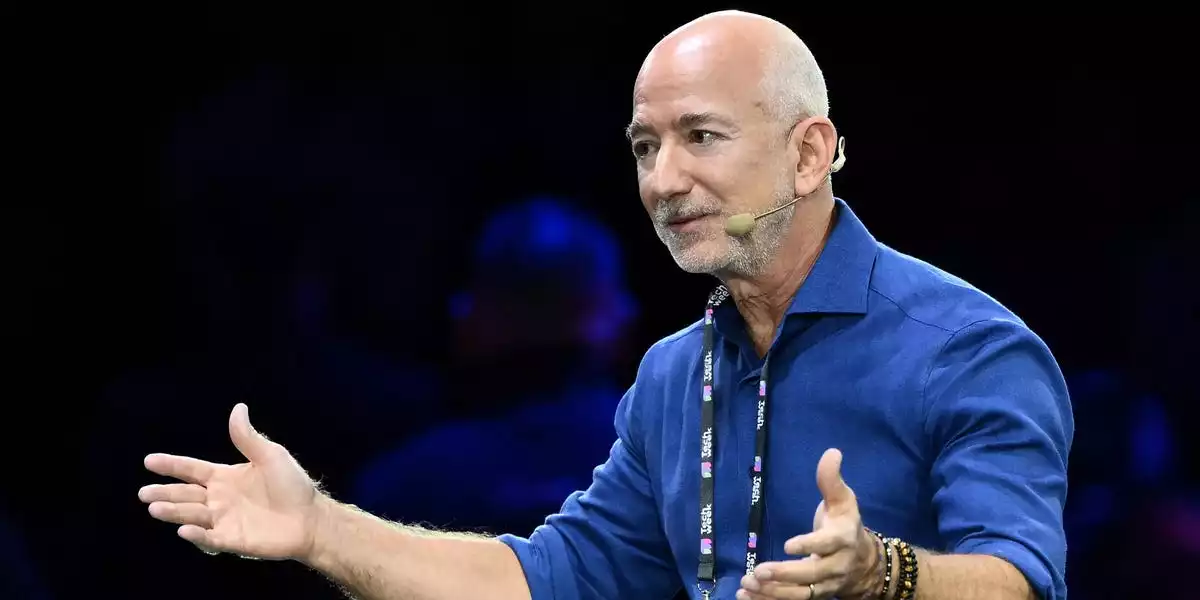
At the center is a growing skepticism toward mega-scale AI infrastructure spending. Amazon’s Jeff Bezos, for instance, saw an estimated $15 billion decline in net worth as investors reacted to the company’s planned $200 billion AI infrastructure outlay. The market’s message is not that AI is optional; it is that AI must now be justified with clearer timelines, unit economics, and measurable business outcomes.
This is the defining tension of the current cycle: generative AI at scale is capital-intensive, requiring not only compute and data centers, but also new chip strategies, energy procurement, security frameworks, and scarce technical talent. Those costs arrive immediately; the returns often arrive later—and “later” is a harder sell in an environment shaped by volatility and a higher cost of capital.
—
Big Tech’s AI spending meets a tougher standard of proof
The sharpest wealth declines map closely to the market’s reassessment of how AI will translate into durable earnings power—particularly for incumbent software and cloud leaders.
Oracle’s Larry Ellison reportedly lost $47 billion after a 23% share-price slide, driven by doubts over Oracle’s AI strategy. Yet the subsequent modest rebound—following signs of strong enterprise demand—highlights a crucial nuance for investors: enterprise AI adoption is real, but the market is increasingly selective about *who captures the margin* and *how defensible that capture is*. In other words, demand alone is not enough; the question is whether AI becomes a differentiator or a commoditized feature delivered at thinner spreads.
Steve Ballmer, tied to Microsoft’s performance, saw an estimated $25 billion decline amid concerns that AI-powered tools could cannibalize core software revenues. That fear underscores a broader issue facing platform incumbents: AI can expand product value, but it can also compress pricing power if customers perceive AI features as bundled expectations rather than premium upgrades.
Across these cases, investors appear to be applying a more rigorous checklist to AI investment narratives:
- Payback horizon clarity: When do AI capex and operating costs translate into incremental cash flow?
- Monetization mechanics: Are AI features sold as premium tiers, usage-based services, or embedded retention tools?
- Competitive insulation: Is the advantage data, distribution, workflow integration, or simply scale?
- Margin durability: Does AI raise gross margins through automation—or lower them through compute-heavy delivery?
This is not an “AI bust” so much as a re-pricing of uncertainty. Markets are still rewarding credible execution, but they are penalizing strategies that look like open-ended spending commitments without near-term proof points.
—
Private-market optionality vs. public-market discipline: the Musk divergence
The standout counterpoint is Elon Musk, who added roughly $44 billion as valuations rose for SpaceX and xAI, even as Tesla faced share pressure. The divergence is instructive: it illustrates how private markets can sustain higher “optionality premiums”—pricing in exponential outcomes—while public markets demand quarterly accountability and clearer comparables.
Private valuation frameworks often tolerate:
- Longer timelines to product-market fit
- Higher uncertainty in revenue models
- Narrative-driven expectations around category creation
Public markets, by contrast, tend to compress valuation when:
- Capex rises faster than revenue
- Competitive moats appear ambiguous
- Macro conditions elevate discount rates
Musk’s wealth gains therefore highlight a structural feature of today’s AI economy: some of the most aggressively priced AI bets are being incubated outside public-market scrutiny, where investors can underwrite risk differently. For corporate strategists, this raises a practical question: will more AI innovation migrate into private vehicles—spinouts, joint ventures, or venture-backed subsidiaries—where experimentation is less constrained by quarterly optics?
—
Consumer sensitivity, geopolitics, and the “defensive AI” trade
The wealth decline of Bernard Arnault, estimated at $42 billion, points to a parallel story: AI is not the only driver of billionaire wealth in 2026. Luxury’s vulnerability to trade frictions and discretionary-spending pressure shows how quickly macro and geopolitics can overwhelm brand strength, particularly when demand softens across key regions and currency or tariff risks rise.
Meanwhile, the gains among the Walton siblings, supported by Walmart’s 12% rally, reflect a different investor preference: AI as operational leverage rather than AI as moonshot. Walmart’s momentum—linked to e-commerce execution and AI optimism—suggests markets are rewarding companies that deploy AI to improve measurable fundamentals, such as:
- Supply-chain forecasting and inventory efficiency
- Fulfillment speed and last-mile cost reduction
- Personalization that lifts conversion without excessive marketing spend
- Shrink reduction, fraud detection, and workforce optimization
This is “defensive AI” in the best sense: not defensive as in timid, but defensive as in resilient, tied to repeatable cash flows and operational control. It also reinforces a strategic advantage held by integrated incumbents: firms with end-to-end ecosystems can embed AI across logistics, marketplaces, payments, and customer service—creating compounding benefits that are harder to replicate with a single product.
The 2026 billionaire reshuffle ultimately reflects a market that still believes in AI’s transformative potential, but no longer treats transformation as a substitute for accountability. Capital is available, but it is becoming more conditional—flowing toward leaders who can translate compute into cash flow, and vision into verifiable execution.

 By
By
 By
By
 By
By

 By
By

 By
By
 By
By







